







Hidden Gems in Europe: 5 Underrated Cities to Visit in 2026
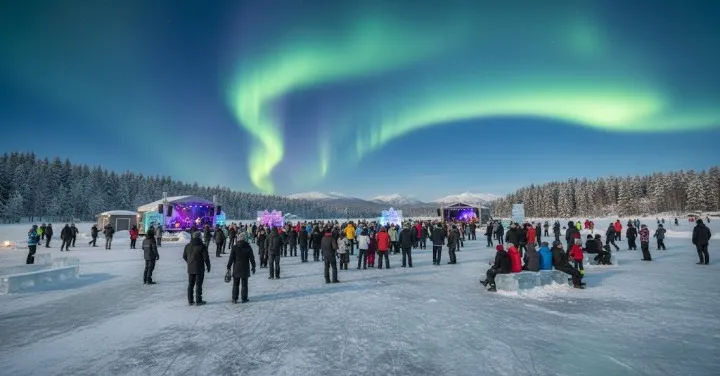
Imagine standing on the edge of a frozen bay in Northern Finland, the air so crisp it feels like diamonds against your skin, while the rhythmic beat of electronic music pulses through the ice. Or perhaps you find yourself in a 13th-century cellar in Utrecht, sipping craft ale as the water of a two-tiered canal laps just inches from your table. If you are tired of the suffocating crowds of Venice or the rising costs of Paris, you are not alone; the modern traveler is increasingly seeking authenticity over “checklist” tourism. In this guide, you will discover five underrated cities that are poised to become the most compelling hidden gems in Europe by 2026. From the Arctic creativity of Oulu to the “Jerusalem of the Balkans” in Ohrid, these destinations offer a profound connection to culture, history, and sustainable living. You will learn how the 2026 European Capitals of Culture and the burgeoning sleeper train revolution are making these secret spots more accessible than ever before. Whether you seek the “Miami of Europe” or a living history book, this report unveils the future of European exploration.
The Macro-Trends of 2026: A Shift Toward Intentional Discovery
The European travel landscape of 2026 is defined by a fundamental shift in traveler psychology and regulatory frameworks. The era of “overtourism” in primary hubs has catalyzed a 25% increase in searches for secondary cities and smaller towns where the pace of lifestyle remains undisturbed by mass-market hospitality. Travelers are no longer satisfied with passive sightseeing; they are choosing “Purpose-Driven Travel,” an ethos that prioritizes deep cultural immersion, community-based experiences, and a reduced carbon footprint. This shift is bolstered by the European Union’s implementation of the European Travel Information and Authorisation System (ETIAS) and the Entry/Exit System (EES). These systems, expected to be fully operational by the final quarter of 2026, will streamline border management through digital pre-screening and biometric data collection, though they will also require travelers from visa-exempt nations to adjust to more automated, data-driven entry processes.
The infrastructural backbone of these hidden gems is the “Sleeper Train Renaissance.” By 2026, the European Sleeper network and other private operators will have launched or stabilized several key overnight routes, such as the Paris-Berlin connection via Brussels and the Amsterdam-Milan service through the Swiss Alps. These rail links are not merely modes of transport; they are sustainable alternatives to short-haul flights that turn the journey itself into a narrative experience. As digital nomadism matures, these secondary cities are also investing in high-speed connectivity and “bleisure” (business and leisure) infrastructure, making them ideal bases for those who wish to stay longer and explore deeper.
| Travel Trend 2026 | Impact on Underrated Cities | Key Mechanism |
| Sleeper Train Revival | High accessibility for remote hubs | Overnight rail links (Paris-Berlin, Amsterdam-Milan) |
| ETIAS/EES Implementation | Digital-first border management | Mandatory pre-screening and biometric entry |
| Slow Travel Adoption | Longer stays, deeper immersion | “Purpose-driven” itineraries and artisan workshops |
| Economic Value Shift | High-value luxury in the Balkans/Baltics | Favorable exchange rates and affordable luxury |
| Northern Shift | Increased interest in Arctic/Scandi hubs | Oulu 2026 Capital of Culture and climate-conscious travel |
Oulu, Finland: The Arctic Capital of Cultural Climate Change
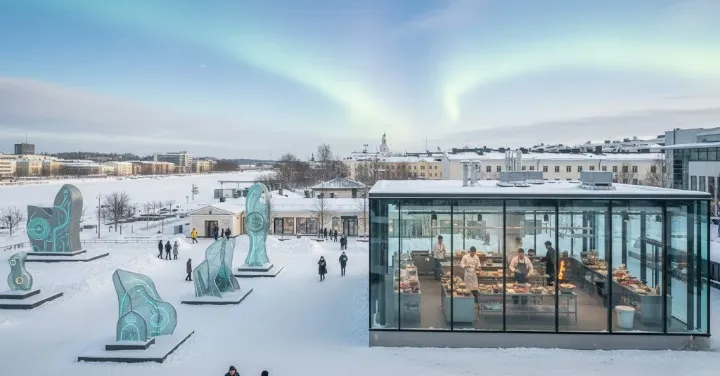
Oulu, Finland, has been designated as one of the two European Capitals of Culture for 2026, representing a definitive pivot toward the “Northern Shift” in European tourism. The city’s central theme, “Cultural Climate Change,” is a multi-layered concept that addresses environmental sustainability while simultaneously aiming to revitalize the social and cultural “climate” of the northern regions. Oulu is a city where technology meets the wilderness, often referred to as a “Wild City” where the urban core is inextricably linked to the surrounding Arctic hinterland.
Cultural Programming and 2026 Highlights
The Oulu 2026 program is a massive collaborative effort involving 39 surrounding municipalities, emphasizing inclusivity and cross-border cooperation. One of the flagship projects is the “Climate Clock,” an artistic and scientific installation featuring six permanent artworks spread across different neighborhoods to raise awareness of ecological timelines. For the tech-curious, the “Lumo Art & Tech Festival” will expand significantly in November 2026, using spectacular light installations to transform the dark northern winter into a canvas for international digital artists.
The city’s identity as a hub for creativity is perhaps best exemplified by its quirky annual traditions, such as the Air Guitar World Championships held every August. However, in 2026, the focus expands to include the indigenous Sámi culture through the “Risku” project, which showcases Sámi art, opera, and dance throughout the year. The “Snowball” world premiere in December 2026 will cap off the year with a spectacular performance set against the backdrop of the Northern Lights.
Arctic Gastronomy: The Arctic Food Lab
A core pillar of the 2026 experience is the “Arctic Food Lab,” a program designed to highlight the unique flavors of the North. This is not merely about dining; it is a movement that links local producers with chefs to celebrate the purity of northern ingredients. Travelers in 2026 can expect to sample reindeer, wild berries, and fish caught from the Bothnian Bay, all prepared using a blend of traditional preservation methods and modern culinary techniques. This gastronomic focus aligns with the broader “slow food” trend, encouraging visitors to understand the origin and cultural significance of their meals.
Seasonal Experiences: From the “Brave Hinterland” to the “Wild City”
Oulu’s tourism strategy for 2026 is divided into distinct seasonal themes. The “Brave Hinterland” phase (early 2026) focuses on the exotic northern winter, where visitors can experience ice floating, northern lights hunting, and electronic music festivals held on the frozen sea. As the light returns, the “Wild City” phase (spring and summer) emphasizes the freedom of northern light, nature trails, and a vibrant urban life that stays active 24/7 under the midnight sun.
| Oulu 2026 Seasonal Theme | Key Activities | Focus |
| Brave Hinterland | Ice floating, Sámi opera on ice, Northern Lights | Winter exoticism and resilience |
| Wild City | Qstock festival, nature trails, “Wild” urban culture | Light, nature, and summer energy |
| Cool Contrasts | Lumo Art & Tech, Arctic Food Lab, Snowball premiere | Technology vs. tradition, Light vs. Dark |
Trenčín, Slovakia: Awakening Curiosity in the Heart of the Váh Valley
Sharing the title of European Capital of Culture 2026 is Trenčín, Slovakia. Nestled near the Czech border on the banks of the Váh River, this city of 55,000 people offers an intimate look at Central European history through its theme, “Awakening Curiosity”. Trenčín is anchored by its dramatic medieval castle, which sits atop a limestone cliff and serves as the visual and spiritual center of the city’s 2026 celebrations.
The Castle and Legend-Based Contemporary Art
Trenčín Castle is not just a relic; it is a living venue for 2026. One of the primary multimedia exhibitions is “The Well of Love,” which reimagines the legend of Omar and Fatima—a story of a Turkish prince who dug a health&fitness through solid rock to win the freedom of his beloved. This blend of ancient legend and modern artistic interpretation is central to Trenčín’s goal of building bridges between the past and the future. Below the castle, the “Roman Inscription,” carved into the rock in 179 AD, serves as a reminder of the city’s ancient roots as the northernmost Roman camp in Central Europe.
Community Art and the “Waiting Places” Project
In 2026, Trenčín is pioneering the “Waiting Places” project, which seeks to bring high-level art to unconventional public spaces such as hospitals, police stations, and employment offices. This initiative aims to transform the mundane experience of waiting into a moment of cultural curiosity and reflection. The city is also undergoing a major structural transformation, including the renovation of its local library and the revitalization of the “Technology Village” through artistic interventions.
Festivals and the “Fiesta Bridge”
Trenčín is the home
of the Pohoda Festival, which was named the Best Medium-Sized Festival in Europe in 2025. In 2026, the festival will play a central role in the summer program, but the true highlight will be the opening of the “Fiesta Bridge.” This new landmark will connect the two banks of the Váh River, hosting theater, music, and children’s sports, symbolizing the city’s commitment to social cohesion and public space reimagining.
| Trenčín 2026 Project | Description | Target |
| Waiting Places | Art in hospitals, police stations, and post offices | Everyday cultural accessibility |
| Fiesta Bridge | New symbolic landmark connecting riverbanks | Community engagement and sports |
| The Well of Love | Multimedia exhibition at Trenčín Castle | Contemporary reimagining of local legends |
| Garage | Summer festival of emerging music | Fresh Slovak and European talent |
| Creative Institute Trenčín | New cultural management organization | Long-term cultural sustainability |
Sarajevo, Bosnia and Herzegovina: A Living History Book Reborn
Sarajevo is a city that defies simple categorization. It is a place where you can walk from an Ottoman-style bazaar to an Austro-Hungarian district in a matter of minutes, a physical manifestation of the “Sarajevo Meeting of Culture” line found in the pavement of Ferhadija Street. In 2026, the city is emerging as a premier destination for those seeking “emotionally powerful” travel that balances a tragic recent past with a vibrant, resilient present.
The Neighborhood Fabric: Vratnik, Mejtaš, and Baščaršija
The soul of Sarajevo is found in its mahalas—traditional hilltop neighborhoods. Vratnik, with its ancient fortifications and narrow streets, offers the best sunset views from the Yellow and White Fortresses, where locals and travelers alike gather as the call to prayer echoes across the valley. Mejtaš provides a quieter, more residential feel with preserved Austro-Hungarian homes service and “local cafés where you can mingle with residents” away from the main tourist trail.
Coffee Culture and the Ritual of Conversation
In Sarajevo, coffee is not a drink; it is a social lubricant. The process of preparing Bosnian coffee—ground manually and served in a džezva with a fildžan and a cube of sugar—is a ritual that invites the traveler to slow down. This culture of “slow consumption” is perfectly aligned with 2026’s travel trends. Exploring the Kazandziluk (coppersmith) street in the Baščaršija allows visitors to see the artisans who have handcrafted these coffee sets for centuries, providing a direct link to the city’s Ottoman heritage.
The 2026 Sarajevo Film Festival and Contemporary Energy
The Sarajevo Film Festival, scheduled for August 14–21, 2026, is the city’s most significant modern cultural export. It transforms the city into a global stage for Balkan and international cinema, filling the streets with open-air screenings and a red-carpet energy that rivals much larger European capitals. Beyond the festival, the city is seeing a “new level of comfort” with investments in luxury hotels and a sophisticated dining scene that blends traditional flavors with modern innovation.
| Sarajevo Landmark | Historical Significance | 2026 Experience |
| Latin Bridge | Site of Archduke Franz Ferdinand’s assassination | Museum and “bridge through time” tour |
| Yellow Fortress | 18th-century fortification | Panoramic sunset views and local gathering |
| War Childhood Museum | Documentation of the 1990s siege | Moving, internationally-awarded museum |
| Gazi Husrev-beg Mosque | 16th-century Ottoman masterpiece | Guided architectural and cultural tours |
| Vijećnica (City Hall) | Austro-Hungarian Moorish Revival | Restored architectural gem and library |
Utrecht, Netherlands: The Authentic Alternative to Amsterdam
While Amsterdam struggles with the pressures of overtourism, its “cool, laid-back cousin” Utrecht—just 30 minutes away by train—offers the quintessence of Dutch charm with a youthful, artistic edge. Utrecht’s unique topography, specifically its two-tiered wharf system, creates a waterside culture found nowhere else in the world.
The Two-Tiered Canal and Wharf Cellars
The Oudegracht and Nieuwegracht canals are characterized by wharves built at the water level, connected to street-level houses by steep stone steps. In 2026, these 13th-century vaulted cellars serve as the city’s creative heart, housing some of the “best restaurants in Utrecht” where diners can sit right at the water’s edge. This “rare two-tiered world” allows travelers to experience the city’s history while enjoying a cosmopolitan energy.
Architectural Icons and Hidden “Hofjes”
Utrecht is dominated by the Domtoren, the tallest belfry in the Netherlands. After an “interminable restoration,” the tower is finally free of scaffolding for 2026, offering guided climbs to its 95-meter peak for views that stretch as far as the coast. For a quieter experience, the city is dotted with “hofjes” or hidden courtyards, such as Pandhof Sinte Marie, a medieval garden that offers a “peaceful escape from city life” amidst the bustling center.
“Utrecht Lumen” and the Nighttime Glow
One of Utrecht’s most innovative 2026 features is “Utrecht Lumen,” a series of light-art installations that illuminate the city’s key sights after dark. This trail leads visitors to locations where “the noise fades and top attractions are seen in a totally different light,” such as the ‘t Tunneltje tunnel, where changing lights color the graffiti as you descend to the canal wharf. This project highlights Utrecht’s commitment to using modern technology to enhance its historic bones.
| Utrecht Hidden Gem | Type | Why Visit in 2026 |
| Rietveld Schröder House | Architecture | UNESCO site, masterpiece of De Stijl |
| DOMunder | Archeology | Explore 2,000 years of history under the square |
| Café Olivier | Gastronomy | Hidden Belgian beer haven in a former church |
| Museum Speelklok | Museum | Musical clocks and self-playing instruments |
| Nijntje (Miffy) Light | Quirky | Tribute to local creator Dick Bruna |
Ohrid, North Macedonia: The Jerusalem of the Balkans
Lake Ohrid is one of the oldest and deepest lakes in Europe, and the town that shares its name is a UNESCO World Heritage site that provides “Old World allure” at a fraction of the cost of the Greek Islands or the Dalmatian Coast. Often called the “Jerusalem of the Balkans,” Ohrid once famously housed 365 churches—one for every day of the year.
The Spiritual and Archeological Core
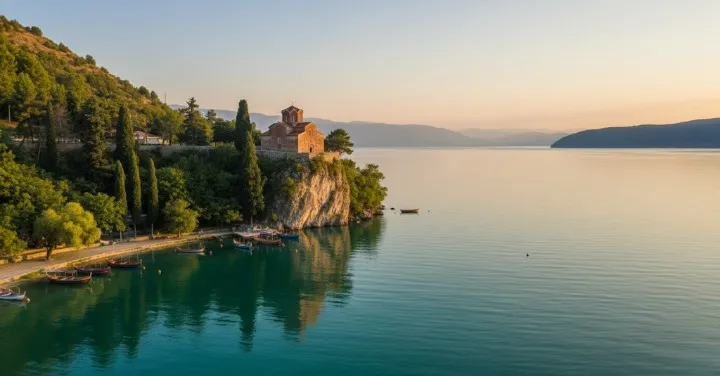
The most photographed spot in Macedonia is the Church of Saint John at Kaneo, which sits alone on a cliff with the vast turquoise lake as its backdrop. In 2026, travelers can dive deep into the city’s “thousand-year history” by visiting Samuel’s Fortress and the Ancient Theatre, the only remaining Greek-style theater in the Balkans. The Plaošnik district, home to the Church of St. Clement and St. Panteleimon, is considered the “birthplace of Slavic literature and the Cyrillic alphabet”.
The Lake Experience: Boats, Springs, and the Bay of Bones
A trip to Ohrid is incomplete without experiencing the water. Boat tours typically head toward the Monastery of Saint Naum, a 10th-century Byzantine structure sitting atop freshwater springs that feed into the lake. Along the way, visitors can stop at the “Bay of Bones,” an authentic reconstruction of a prehistoric pile-dwelling settlement that allows you to walk through a “floating village” as it existed thousands of years ago.
Value and Gastronomy in 2026
Ohrid is a “budget-conscious traveler’s dream”. In 2026, renting a sun lounger at a lakeside beach bar like Potpesh costs roughly €3 to €6, while a three-course meal for two people averages approximately €29. Signature dishes include the Ohridska Pastrmka (Ohrid trout), tavče gravče (baked beans in a clay pot), and the local Mastika liquor. The “Old Bazaar” remains the “thumping heartbeat” of the city at night, where visitors can find family-run establishments serving delicious, inexpensive meals.
| Ohrid Attraction | Estimated Entry/Cost | Highlight |
| Samuel’s Fortress | ~€2.00 | Panoramic views of the lake and town |
| Bay of Bones | ~€1.80 | Prehistoric lake dwelling reconstruction |
| St. Naum Boat Tour | €10 – €20 | Springs, monastery, and scenic cruise |
| Ohrid Trout Dinner | €12 – €18 | Traditional local delicacy |
| Summer Festival | Varies | World-class theater and concerts in July/Aug |
Navigating the Logistics of 2026: A Practical Guide
To fully enjoy these hidden gems, travelers must adapt to the new European transportation and border realities of 2026. The “Sleeper Train Revolution” makes it possible to link these cities sustainably, while new digital requirements like ETIAS demand pre-trip preparation.
The Sleeper Train Revolution: Routes and Booking
By June 2026, the European Sleeper will have solidified its network, offering direct overnight links between major creative hubs. This is essential for the “Slow Travel” model, as it saves the cost of a hotel night and reduces the traveler’s carbon footprint.
| New Sleeper Route (2026) | Launch Date | Stops Include |
| Paris to Berlin | March 26, 2026 | Brussels, Liège, Hamburg |
| Amsterdam to Milan | June 18, 2026 | Brussels, Bern, Stresa |
| Brussels to Prague | Operational | Antwerp, Amsterdam, Berlin, Dresden |
| Munich to Zagreb | 2026 | Villach, Salzburg |
| London to Scotland | 2026 (Updated) | Via Birmingham on “Highlander” route |
ETIAS and EES: What You Need to Know
For travelers from the US, UK, Canada, and Australia, entering the Schengen Area in late 2026 requires an approved ETIAS (European Travel Information and Authorisation System). This authorization is valid for three years and costs €20. Furthermore, the Entry/Exit System (EES) replaces traditional passport stamps with biometric data (fingerprints and facial recognition), which will digitally track the 90/180-day limit.
Step-by-Step ETIAS Prep:
- Check Passport: Ensure it has at least 3 months validity remaining beyond your intended stay.
- Official Application: Apply only via europa.eu/etias. Beware of third-party scams.
- Biometric Readiness: Expect to have your photo and fingerprints taken at the first point of entry into the Schengen zone.
- Fee Payment: Use a payment card for the mandatory €20 fee (exemptions apply for those under 18 or over 70).
Budgeting for Hidden Gems
One of the primary advantages of these underrated cities is the value proposition. While prices in Western Europe are rising, the Balkans and parts of Central Europe remain highly accessible.
| City | Est. Daily Budget (Mid-range) | Best Value Tip |
| Sarajevo | $30 – $65 | Use local furgons or trams; eat in pekara bakeries |
| Ohrid | $25 – $55 | Stay in family-run villas (approx. €49/night) |
| Trenčín | $40 – $80 | Look for daghappen (daily specials) in local pubs |
| Utrecht | $70 – $110 | Buy a museum pass; explore the city on two wheels |
| Oulu | $80 – $130 | Book “Capital of Culture” events 6 months in advance |
Conclusion: The New Frontier of European Travel
The year 2026 represents a watershed moment for the traveler who seeks more than just a selfie. By choosing Oulu, Trenčín, Sarajevo, Utrecht, or Ohrid, you are participating in a movement toward a more sustainable, curious, and authentic Europe. Oulu and Trenčín, as the 2026 European Capitals of Culture, prove that the future of creativity is not just in Paris or Berlin, but in the “Wild Cities” and “Awakening Curiosity” of the north and east. Sarajevo and Ohrid offer a profound connection to history and value that honors the resilient spirit of the Balkans. Meanwhile, Utrecht shows us that we can find the heart of the Netherlands without the chaotic crowds of Amsterdam.
As you plan your 2026 adventures, remember that the most rewarding journeys are those that challenge your perspectives and allow you to hear the past breathe. Whether you are catching a sleeper train across the Alps or hiking to a clifftop church in Macedonia, the hidden gems in Europe are waiting to reward your curiosity. The map of Europe is expanding; it is time to look beyond the icons and discover where the true heart of the continent truly beats. Book your tickets early, embrace the slow pace, and find your own secret corner of the world in 2026.