








Introduction
Envision strumming your ukulele for the primary time, energized to play that catchy Hawaiian song, as it were to listen a jarring, off-key twang that produces you flinch. You’ve felt that dissatisfaction, haven’t you? That minute when your instrument sounds more like a cat in trouble than a cheerful companion. It’s a common hurdle for tenderfoots, but tuning your ukulele doesn’t got to be intimidating it’s the key to opening clear, dynamic sounds that make playing pleasant.
In this direct, you’ll find how to tune a ukulele with straightforward, step-by-step strategies custom-made for all ability levels. We’ll cover basic devices like clip-on tuners and apps, clarify standard tuning, and share tips to keep your uke in pitch indeed in shifting climates. Anticipate down to earth counsel, real-life analogies, and investigating for common pitfalls, so you’ll center on the fun of making music. Whether you’re prepping for a casual stick or a execution, let’s get your strings singing sweetly.
Why Tuning Your Ukulele Matters
You pick up your ukulele, eager to practice, but the notes clash like mismatched socks in a drawer. Proper tuning transforms that discord into harmony, ensuring every chord rings true and your music captivates. Without it, even simple songs sound flat or sharp, frustrating both you and your listeners.
In practical terms, regular tuning extends your instrument’s life. Strings stretch over time, especially new ones, and environmental factors like humidity or temperature shifts—common in places like Pakistan’s varying climates—can throw them off. A well-tuned uke also builds your ear for music, helping you progress faster as a player.
Think of it like seasoning a meal: Skip it, and the dish falls flat; get it right, and flavors pop. For beginners, starting with accurate pitch boosts confidence, making lessons more rewarding. Seasoned players know untuned strings lead to bad habits, like overcompensating with finger pressure. Ultimately, tuning is your foundation—skip it, and your musical house wobbles.
Tools You’ll Need to Tune a Ukulele
Gathering the proper instruments simplifies the method, turning what may well be a chore into a fast custom. A clip-on tuner stands out as the go-to for accuracy compact gadgets just like the Snark or D’Addario models vibrate to identify pitch, disregarding foundation clamor for exact readings.
In the event that tech requests, free apps like Bumper Tune or Ukulele Tuner utilize your phone’s mic to direct alterations, regularly with visual bolts appearing in the event that you’re level or sharp. For traditionalists, a pitch pipe or online tone generator gives reference notes, in spite of the fact that they’re less pardoning for tenderfoots.
Do not ignore a calm space; clamor interferes with hearing inconspicuous changes. A guitar tuner works in a squeeze, set to chromatic mode. With these at hand, you’re prepared to preserve that sweet sound easily.
Understanding Standard Ukulele Tuning: GCEA Explained
Standard tuning shapes the spine of most ukulele music, making the signature shinning tone that characterizes the instrument. Known as GCEA (from beat to foot string), it’s re-entrant meaning the G is tall, not moo like on a guitar giving that cheerful, non-linear ring.
For soprano, concert, and tenor ukes, this setup produces a C6 chord when strummed open, idealize for simple movements. Baritones regularly utilize DGBE for a more profound voice, but GCEA remains flexible over sizes.
This setup advanced from Hawaiian conventions, adjusting playability with song. Acing it opens entryways to thousands of tunes, from “Some place Over the Rainbow” to cutting edge pop covers.
Step-by-Step: How to Tune a Ukulele with a Clip-On Tuner
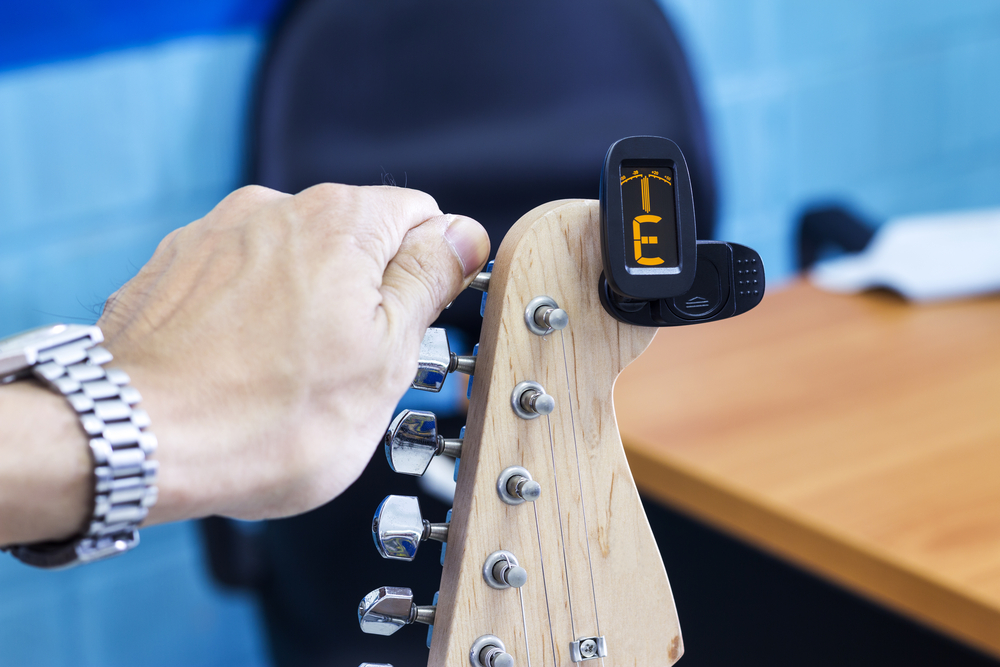
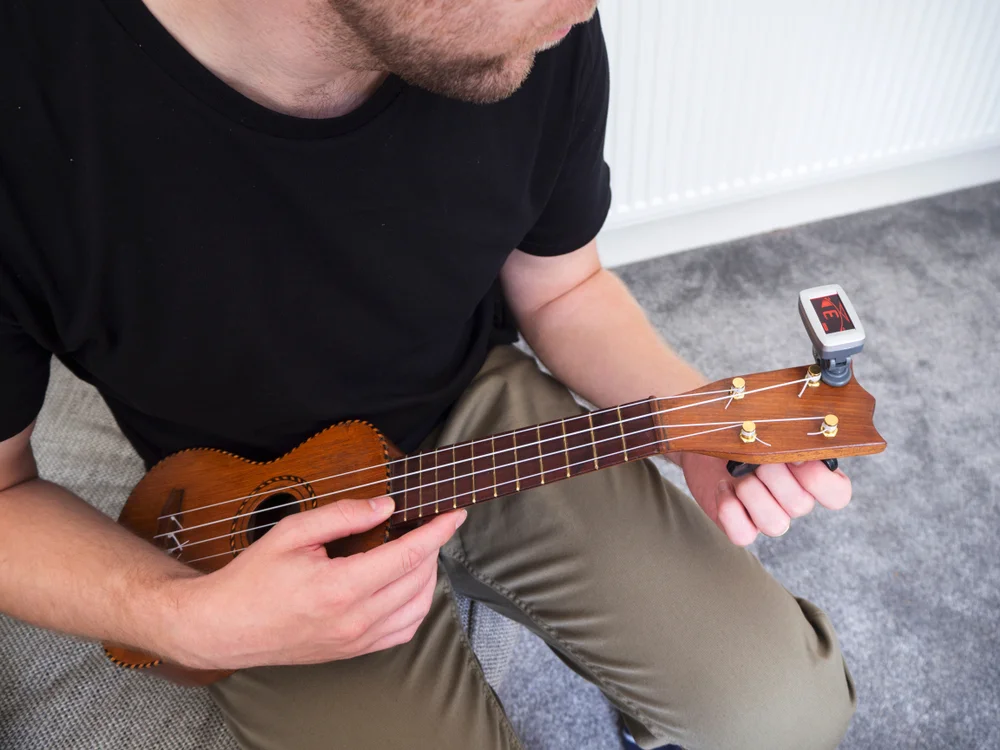
Begin by connecting your tuner to the headstock it clips safely and powers on with a button press. Cull the best string (A) delicately; the show lights up, appearing the note and a needle or lights demonstrating pitch.
On the off chance that it’s level (cleared out of center), turn the tuning peg clockwise to fix, culling over and over until centered. For sharp (right), extricate counterclockwise. Move to the E string, at that point C, and G always tune up to the note for soundness.
Double-check by strumming open; it ought to chime cleanly. This strategy takes minutes, perfect for gigs or hone.
TL;DR: Clip tuner on, pluck each string (A-E-C-G), adjust pegs to center the needle—done in under five minutes.
Alternative Method: Tuning Your Ukulele by Ear
Tuning by ear sharpens your musical instincts, relying on reference pitches without gadgets. Begin with a reliable source like a piano’s middle C for your third string—match it by plucking and twisting the peg until tones blend seamlessly.
From there, use relative tuning: Fret the C string at the second position to match the E string’s open pitch. For A, fret E at fifth; for G, fret E at fourth (high G) or match open if low G.
It’s like a chain reaction—one accurate string tunes the rest. Practice in quiet; over time, you’ll hear discrepancies instinctively.
Using Apps and Online Tuners: Modern Ways to Tune a Ukulele
Smartphones make tuning accessible anywhere—download apps like Ukulele Tuner or GuitarTuna for free. Open the app, select ukulele mode, and pluck a string; visual cues guide adjustments with arrows or colors.
Online tools via websites offer microphone-based tuning, playing reference tones for matching. These are great for travel, with extras like chord libraries.
Surprising fact: Many apps use AI for precise detection, adapting to room noise better than basic tuners.
Tuning Different Ukulele Sizes: Soprano, Concert, Tenor, and Baritone
Size influences tuning subtly, though GCEA dominates. Soprano’s small body suits high G for bright tones; concert adds depth while keeping the same.
Tenor allows low G for richer melodies, fretting easier on longer necks. Baritone shifts to DGBE, guitar-like for bassier sounds.
Adjust for scale: Longer necks need slight intonation tweaks at higher frets.
Common Mistakes When Tuning a Ukulele and How to Avoid Them
Over-tightening strings risks snapping—always tune gradually, checking frequently. Ignoring string age leads to instability; replace every 6-12 months.
Tuning down instead of up causes slippage; approach from below for grip. In noisy environments, vibrations mislead—use clip-ons.
Avoid these by practicing slowly, using quality tools.
Why Your Ukulele Goes Out of Tune: Causes and Prevention
New strings stretch, detuning quickly—retune often initially. Temperature swings expand/contract wood, altering tension; store in stable conditions.
Humidity warps the body; use cases with humidifiers in dry areas. Rough handling loosens pegs—gentle transport helps.
Prevention: Regular checks, climate control, and quality strings keep it stable.
Advanced Tuning Techniques: Low G vs. High G and Alternative Tunings
High G (re-entrant) gives traditional sparkle; low G adds depth for fingerpicking. Switch by replacing the G string.
Alternatives like ADF#B raise pitch for brighter sound; DGBE suits baritones. Experiment to match genres—low G for bluesy vibes.
Best Ukulele Tuners and Apps in 2025: Recommendations
Top clip-ons: Snark SN6X for vibration accuracy, Korg for durability. Apps: Yousician integrates lessons with tuning; Pano Tuner offers chromatic precision.
2025 trends: AI apps like TuneAI adapt to user habits. Budget picks under $20 deliver reliability.
History of Ukulele Tuning: From Hawaii to Global Standards
Born in 19th-century Hawaii from Portuguese braguinha, early tunings varied. Manuel Nunes standardized GCEA in the 1880s, spreading via vaudeville.
Global adoption solidified it, influencing icons like Israel Kamakawiwo’ole. Today, it’s universal, blending tradition with innovation.
Tuning for Beginners: Building Ear Training Skills
Start with tuners, then graduate to ear methods for growth. Daily practice matching notes hones pitch recognition.
Analogies: Like tasting spices—over time, you detect subtleties. Apps with games make it fun, turning tuning into skill-building.
Troubleshooting: What If Your Ukulele Won’t Stay in Tune?
Inspect for loose pegs—tighten or replace. Check nut/bridge for wear; file if strings bind.
Old strings slip—swap them. If persistent, professional setup adjusts action.
Ukulele Intonation: Ensuring Accurate Pitch Across Frets
Intonation means even tuning up the neck. Test by comparing open string to 12th fret harmonic—if off, adjust saddle.
DIY: Use tuner at various frets; pros handle precise setups.
Seasonal Tuning Tips: Handling Humidity and Temperature Changes
In monsoons, humidity swells wood—use dehumidifiers. Dry winters contract strings—humidify cases.
Tune more frequently during changes; silica packs help stability.
Tuning for Performances: Pro Tips from Ukulele Experts
Pre-show: Tune twice, let settle. Backup tuner essential.
Stage lights heat instruments—retune mid-set. Pros like Jake Shimabukuro swear by clip-ons for speed.
Creative Uses of Alternative Tunings in Music
- Slack-key (open tunings) for Hawaiian folk; drop C for bassy riffs.
- Examples: Eddie Vedder’s covers in alternate tunings add emotion.
Ukulele Maintenance to Support Better Tuning
- Clean strings weekly with cloth; condition fretboard oil monthly.
- Store upright in case; avoid direct sun to prevent warping.
Comparing Ukulele Tuning to Other String Instruments
- Vs. guitar: Similar pegs, but re-entrant vs. linear. Mandolin’s GDAE mirrors but doubles strings.
- Lessons transfer: Ear skills from one aid all.
Resources for Learning More About Ukulele Tuning
- Books: “Ukulele Handbook” by Hal Leonard. Online: Ukulele Underground forums, YouTube channels like Ukulele Teacher.
- Apps: Beyond tuning, Yousician teaches via play-along.
FAQs About How to Tune a Ukulele
What is standard ukulele tuning?
GCEA for most sizes, with high G.
Can I tune without a tuner?
Yes, by ear using relative methods or piano references.
How often should I tune my ukulele?
Before every play session, especially with new strings.
Why does my ukulele go out of tune quickly?
New strings stretch; environmental changes affect it.
What’s the best tuner for beginners?
Clip-on like Snark—affordable and user-friendly.
Conclusion
Acing how to tune a ukulele opens a world of melodic delight, from fundamental strums to complex tunes. You’ve learned standard GCEA, devices like clip-on tuners and apps, step-by-step strategies, and tips for distinctive sizes and choices. Dodge common pitfalls, keep up your instrument, and investigate imaginative tunings to keep your music new.
Keep in mind, steady tuning builds not fair pitch-perfect sound but your melodic ear too like sustaining a fellowship that develops wealthier over time. Presently, get your uke, apply these steps, and let the harmonies stream. Prepared to play? Head to a neighborhood music shop or online instructional exercise for your another song your tuned ukulele is standing by!
For more information: https://ecofiy.com