







Pickleball Rules for Beginners: Master the 2025 Basics & Start Winning
You’ve got the paddle. You’ve found the court. You’re ready to sweat. But then, you freeze. Someone yells, “0-0-2!” and you realize you have no idea what that means. Or worse, you step into the “Kitchen” and get called out before you even hit the ball.
Sound familiar?
It’s the most common hurdle for new players. Pickleball is famous for being easy to learn, but the specific rules—especially scoring and the Non-Volleyball Zone—can feel like trying to solve a math equation while running a sprint.
This guide is your cheat sheet. We aren’t just listing rules; we are going to walk you through the logic of the game so you can stop worrying about faults and start focusing on winning. Whether you are playing singles or doubles, you will learn exactly where to stand, how to serve legally under the new 2025 regulations, and how to use the “Kitchen” to your advantage.Let’s get you court-ready.
The Court and Equipment: Your Battleground
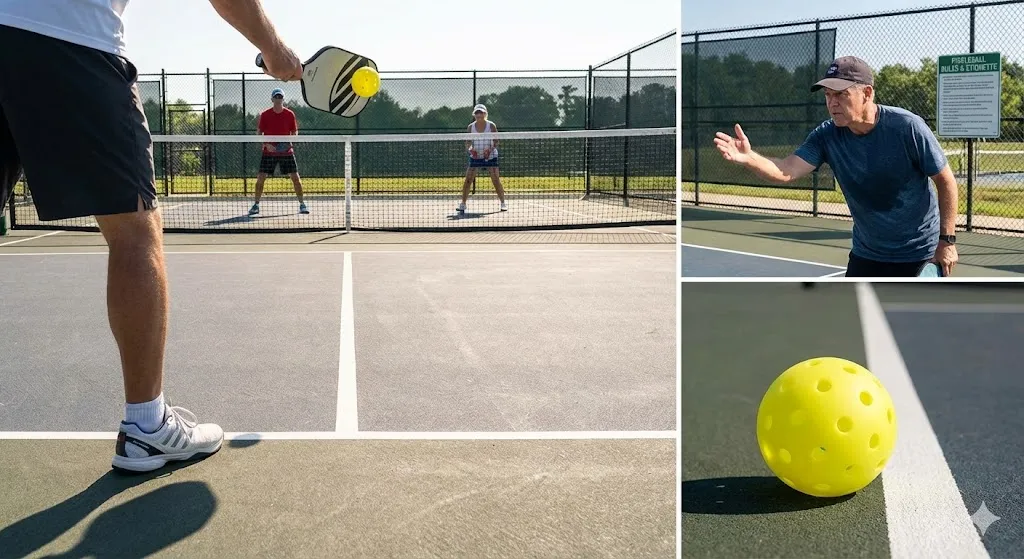
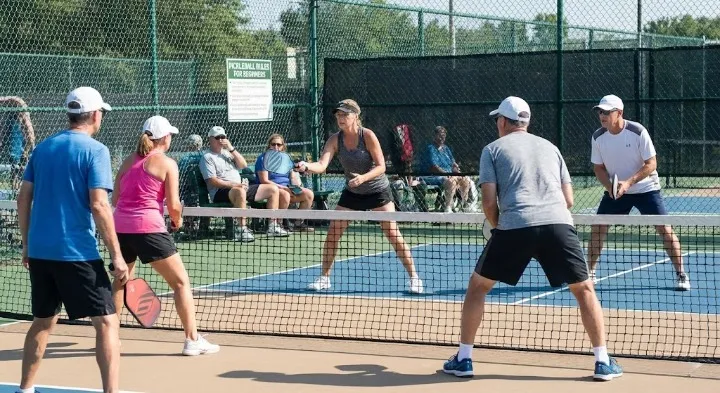
Before you serve, you need to know the lay of the land. A pickleball court is 20 feet wide by 44 feet long—the same size for both singles and doubles.It’s much smaller than a tennis court, which means the action is faster and reaction times are shorter.
The Three Zones You Must Know
- The Baseline: The back line of the court. You must stay behind this when serving.
- The Service Courts: The left and right boxes where the ball must land on a serve.
- The Non-Volley Zone (The Kitchen): The 7-foot area extending from the net on both sides. This is the most critical zone in the game.
Equipment Check: The 2025 rules have cracked down on equipment fairness. Your paddle surface cannot be altered to add extra spin (no sandpaper!), and “delaminated” paddles that act like trampolines are strictly banned.Interestingly, as of 2025, you are allowed to play with an autographed paddle, provided the signature doesn’t mess with the ball’s flight.
Serving Rules: How to Start the Point (2025 Updates)
The serve is the only time you have total control over the ball. Unlike tennis, the goal isn’t necessarily to ace your opponent, but to simply put the ball in play legally.
The Two Types of Legal Serves
You have two options to start the point. Choose the one that feels most natural to you.
| Feature | Volley Serve | Drop Serve |
| Action | Hitting the ball out of the air. | Dropping the ball and hitting it after the bounce. |
| Motion Rule | Must be an upward arm arc. | No arc restriction (can slice/chop). |
| Contact Point | Must be below the waist (navel). | No height restriction (ball dictates height). |
| Release | Must release ball visibly. | Must drop by gravity only (no throwing down). |
Major 2025 Rule Changes for Servers
If you are reading older guides, they might be wrong. Here is what changed this year:
- The Paddle Release: You are now officially allowed to release the ball off your paddle face to start the serve. You don’t have to use your hand.
- The “Spin” Ban: While you can use your paddle to drop the ball, you cannot spin the ball with your hand or paddle during the release. The “Chainsaw Serve” (spinning the ball to create wild bounces) is illegal. The release must be clean.
- “Not Ready” Cues: If you aren’t ready to receive, you can now use verbal cues like “Stop!” or “Wait!” alongside hand signals. If the server serves anyway, the point is replayed.
Pro Tip: Your serve must land in the diagonal service box. If it hits the Kitchen line, it is a fault (OUT). If it hits the centerline or sideline, it is IN.
The Two-Bounce Rule: The Great Equalizer
This is the rule that confuses beginners the most, but it’s the secret sauce of pickleball. It stops the serving team from smashing the ball immediately.
The Rule Explained:
- Bounce 1: When you serve, the receiving team must let the ball bounce before returning it.
- Bounce 2: When they hit it back to you, you (the serving team) must let it bounce before hitting it.
Why It Matters:
You cannot serve and then immediately rush the net to volley. You have to stay back at the baseline until the ball bounces on your side. Only after these two bounces can anyone hit the ball out of the air (volley).
Beginner Mistake: Do not “creep” forward after you serve! If your opponent hits a deep return and you are standing mid-court, you’ll be forced to volley it, which is an immediate fault. Stay back until you see the ball bounce.
Scoring Explained: Decoding the “0-0-2”
Pickleball scoring is unique because it rewards patience. Most recreational games use Side-Out Scoring, meaning you can only score points when your team is serving.
The Three Numbers
In doubles, you will hear the score called as three numbers:
“5 – 3 – 2”
- First Number (5): The serving team’s score.
- Second Number (3): The receiving team’s score.
- Third Number (2): The server number (Server 1 or Server 2).
How the Rotation Works
- Server 1: Starts serving. They continue serving as long as they win points, switching sides (left/right) in Pickleball with their partner after each point.
- Server 2: If Server 1 loses a rally, the serve passes to their partner (Server 2). No “Side Out” happens yet.
- Side Out: If Server 2 loses a rally, the serve goes to the other team.
The “0-0-2” Start Exception: To be fair, the team that starts the game only gets one serve turn before the ball goes to the opponents. That’s why the game starts at 0-0-2 (meaning: 0 points, 0 points, Server 2). As soon as the first server loses, it’s a Side Out.
TL;DR: You only score when you serve. Both partners get a turn to serve (except at the very start of the game).
The Kitchen (Non-Volley Zone): Don’t Get Burned
The “Kitchen” is the 7-foot zone near the net. It is designed to prevent players from standing right at the net and smashing every ball.
The Golden Rule
You cannot volley (hit the ball out of the air) while standing in the Kitchen or touching the Kitchen line.
The Momentum Rule (Crucial for 2025)
You might think you are safe if you jump from outside the Kitchen, hit the ball, and then land inside. Wrong.
- If your momentum carries you into the Kitchen after you volley, it is a fault.
- There is no time limit. If you hit a volley, wobble for three seconds, and then fall into the Kitchen, you lose the point.
- Even if your hat or sunglasses fall into the Kitchen during a volley, it is a fault.
Can I ever go in the Kitchen? Yes! This is a huge myth. You can stand in the Kitchen as much as you want, as long as you don’t volley. If the ball bounces in the Kitchen (a “dink”), you can step in, hit it, and then step out.
Line Calls and Faults: 2025 Etiquette
Pickleball relies on honor. You call the lines on your side of the court.
Is It In or Out?
- The Lines: If the ball touches any part of the sideline or baseline, it is IN.
- The Kitchen Line: On a serve, if it hits the Kitchen line, it is OUT. During a rally, the Kitchen line is part of the Kitchen (so don’t step on it to volley!).
New 2025 Conduct Rules
- No Spectator Help: You cannot ask people watching the game for help with line calls. If you and your opponent disagree, the benefit of the doubt goes to the opponent (the ball is IN).
- Partner Calls: The new rules expect you to call faults on your own partner. If you see your partner step in the Kitchen during a volley, you should call it. It’s about integrity.
Common Beginner Mistakes to Avoid
- Rushing the Serve: Beginners often walk up and hit immediately. Take a breath. Use the new “Not Ready” rule if you need time.
- The “Creep”: moving forward before the return bounces. Remember the Two-Bounce Rule!
- Protecting the Sidelines: New players stand too far apart. Most points are lost in the middle. Close the gap with your partner.
- Panicking at the Net: When the ball comes fast, beginners tend to freeze or flinch. Keep your paddle up (“Guard the chest”) and stay on your toes.
Conclusion
Pickleball rules might seem like a tangle of numbers and zones at first, but they are designed to make the game fun, fair, and strategic.
Remember the core three: Serve from behind the line, let it bounce twice, and stay out of the Kitchen when volleying. Once you master these Pickleball Rules for Beginners, the confusion disappears, and the addiction begins.
So, grab your paddle (autographed or not!), head to the court, and confidently call out “0-0-2.” You’re ready to play.
Click Here For More Information: https://ecofiy.com