






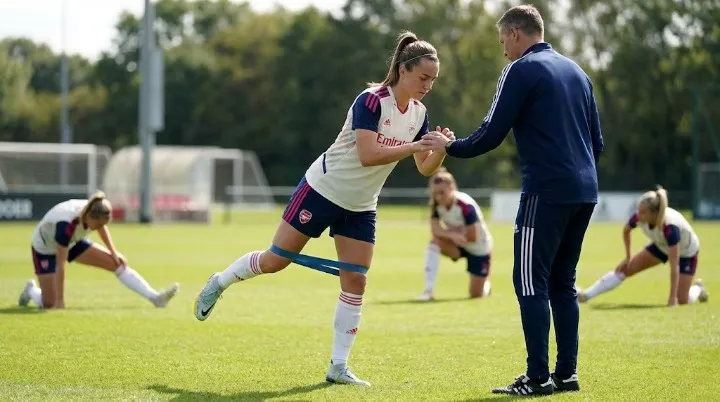
Preventing ACL Injuries Powerful Methods Every Athlete Needs
The anterior cruciate ligament (ACL) represents the cornerstone of knee stability in the high-performance athlete, yet it remains one of the most vulnerable structures in the female musculoskeletal system. Within the contemporary landscape of sports medicine, the disparity between male and female injury rates has moved beyond a mere statistical observation into a clinical crisis that demands immediate, evidence-based intervention. Scientific data consistently indicates that female athletes are between two and eight times more likely to suffer a non-contact ACL injury than their male counterparts in similar sporting environments. This report serves as an exhaustive analysis of the anatomical, physiological, and biomechanical drivers behind this phenomenon, while providing a rigorous strategic framework for the implementation of prevention exercises and neurocognitive training.

The Epidemiological Landscape of the ACL Crisis
The scale of the ACL injury epidemic is profound. In the United States, approximately 150,000 to 250,000 ACL injuries occur annually, with a significant majority occurring during non-contact maneuvers such as pivoting, cutting, or landing. The incidence is particularly high in sports requiring rapid deceleration and change of direction, such as soccer, basketball, and volleyball.
| Sport Category | Female Injury Rate (per 1,000 AEs) | Male Injury Rate (per 1,000 AEs) | Relative Risk |
| Soccer | 0.31 | 0.13 | 2.4x |
| Basketball | 0.29 | 0.07 | 4.1x |
| Lacrosse | 0.23 | 0.13 | 1.8x |
| Volleyball | High (Non-contact) | Moderate | 2.5-4.0x |
The data reveals that while participation in female athletics has surged, the infrastructure for injury prevention has not always kept pace. An athlete who suffers an ACL tear faces an average of six to nine months of lost competition time and a potential loss of scholarship or professional opportunity. Even following successful surgical reconstruction, only 60% of athletes return to their pre-injury level of performance, highlighting the critical importance of primary prevention over secondary treatment.
Anatomical and Physiological Determinants of Risk
The elevated risk profile for female athletes is not a product of chance but is rooted in a complex interplay of anatomical structures and physiological functions. While many of these factors are non-modifiable, understanding them is essential for tailoring exercise programs that can compensate for these inherent vulnerabilities.
The Quadriceps Angle and Pelvic Geometry
One of the primary anatomical features discussed in clinical literature is the quadriceps (Q) angle. First defined in 1964, the Q-angle is the intersection of two lines: one from the anterior superior iliac spine (ASIS) to the patella’s midpoint, and another from the patella’s midpoint to the tibial tubercle. This angle reflects the lateral force acting on the knee joint.
The evidence suggests that females typically possess higher Q-angles than males, with an average of $17^{\circ}$ compared to $14^{\circ}$ for men. It was historically believed that this was due to a wider pelvis in females, but modern research indicates that the ASIS position is relatively consistent across genders; however, shorter femoral length and different hip-to-knee alignment in females result in a more acute angle. When the Q-angle exceeds $19^{\circ}$, the mechanical disadvantage increases the likelihood of the knee collapsing into valgus during dynamic loading, placing extreme tension on the ACL.
Intercondylar Notch and Tibial Slope
The femoral intercondylar notch serves as the housing for the ACL. Clinical investigations using cadaveric and MRI studies have shown that females tend to have a narrower, A-shaped notch compared to the broader, U-shaped notch found in males. A narrower notch may increase the risk of the ligament impinging against the femoral condyles during rotation, potentially predisposing it to failure.
Furthermore, the posterior tibial slope—the angle of the top of the shin bone—is often steeper in female Nutrition for Endurance Athletes. A steeper slope facilitates the forward translation of the tibia during weight-bearing activities, which directly loads the ACL. When combined with increased ligamentous laxity, this creates a mechanical environment where the ACL is constantly operating near its failure threshold during high-intensity sports.
Hormonal Dynamics and Ligamentous Laxity
Physiological risk factors include the cyclical fluctuations of hormones such as estrogen, progesterone, and relaxin. These hormones are increasingly recognized as contributors to joint laxity and altered neuromuscular control. The ACL itself possesses receptors for these hormones, meaning that during specific phases of the menstrual cycle, the ligament may physically become more “stretchy” and less capable of resisting force.
Research indicates that muscle injuries and ligamentous failures are significantly more likely to occur during the ovulatory phase when estrogen levels are at their peak. A 2024 UK study found that female athletes were six times more likely to experience certain injuries in the days leading up to menstruation. While individual variations exist, the clinical consensus suggests that hormonal influence reduces the “stiffness” of the knee joint, requiring the surrounding muscles to work harder to maintain stability.
Neuromuscular and Biomechanical Failure Patterns
While anatomical factors set the stage, the actual injury mechanism is typically a failure of neuromuscular control. Most non-contact ACL injuries occur during “at-risk” movements: deceleration, landing from a jump, or a sudden change of direction (cutting).
Quadriceps Dominance vs. Hamstring Activation
A critical imbalance observed in female athletes is the tendency to be “quadriceps dominant.” During landing or deceleration, females often rely heavily on the quadriceps muscles to stabilize the knee, while the hamstrings remain relatively quiet. The quadriceps acts as an antagonist to the ACL; when it contracts, it pulls the tibia forward, increasing the load on the ligament.
In contrast, the hamstrings are the “protectors” of the ACL. A strong hamstring contraction pulls the tibia backward, relieving stress on the ligament. Clinicians measure this balance using the Hamstring-to-Quadriceps (H:Q) ratio. For optimal ACL protection, athletes should aim for an H:Q ratio of 0.60 or higher. Unfortunately, many adolescent female athletes exhibit ratios far below this, particularly as they go through puberty and their quadriceps strength outpaces their hamstring development.
Dynamic Knee Valgus and Trunk Stability
“Dynamic knee valgus” is the clinical term for the inward collapse of the knee during movement. This pattern is frequently driven by weakness in the hip abductors (gluteus medius) and external rotators. When these muscles fail to stabilize the hip, the femur aducts and rotates internally, forcing the knee into a precarious medial position.
Trunk control also plays a pivotal role. If an athlete has poor core stability, their trunk may sway during a lateral cut, shifting their center of mass and placing enormous rotational torque on the knee joint. This “trunk dominance” failure is a common predictor of ACL injury in female athletes.
Evidence-Based Prevention Frameworks
The most effective method for reducing ACL injury risk is the implementation of a multicomponent injury prevention program (IPP). These programs have been shown to reduce non-contact ACL injuries by 50% to 88% when performed consistently.
The FIFA 11+ Protocol
The FIFA 11+ is a comprehensive 20-minute on-field warm-up designed to be performed at the start of every training session. It consists of 15 exercises divided into three distinct parts. The program is specifically tailored to address the biomechanical deficits common in soccer, but its efficacy extends to most field and court sports.
| Program Section | Exercise Focus | Primary Objective |
| Part 1 | Low-speed running and active stretching | Elevate core temperature and improve mobility |
| Part 2 | Strength, plyometrics, and balance | Enhance core/hip stability and jump mechanics |
| Part 3 | High-speed running and agility | Prepare for game-intensity cutting and pivoting |
Part 2 of the FIFA 11+ is the core of the prevention strategy, offering three levels of difficulty for each exercise to allow for progressive loading as the athlete’s strength improves.
The PEP Program (Prevent Injury, Enhance Performance)
Developed by the Santa Monica Sports Medicine Research Foundation, the PEP program is a 15-to-20 minute routine that focuses on educating the athlete on avoiding high-risk positions. The PEP program is highly effective because it emphasizes the “soft landing” technique, which utilizes hip and knee flexion to absorb impact.
Sportsmetrics
Unlike the warm-up-based FIFA 11+ or PEP, Sportsmetrics is often implemented as a high-intensity, six-week preseason training block. It focuses heavily on explosive plyometrics and has been shown to significantly increase vertical jump height while reducing the incidence of ACL tears in high school volleyball and basketball players.
Detailed Step-by-Step Exercise Guide
To achieve maximum benefit, prevention exercises must be performed with meticulous attention to form. The following guide provides the technical cues necessary for safe execution.
Section 1: Posterior Chain Strength (The ACL Protectors)
1. Nordic Hamstring Curls (The Gold Standard)
This exercise targets the eccentric strength of the hamstrings, which is vital for decelerating the tibia.
- Step 1: Kneel on a soft pad with a partner firmly anchoring your ankles to the ground.
- Step 2: Maintain a rigid, straight line from your head to your knees. Squeeze your glutes and engage your core.
- Step 3: Slowly lower your torso toward the ground, resisting gravity as long as possible using only your hamstrings.
- Step 4: Once you can no longer control the descent, catch yourself with your hands in a push-up position and explode back to the start.
- Sets/Reps: 2-3 sets of 5-8 repetitions.
2. Single-Leg Bridges
Targets the glutes and hamstrings to improve pelvic stability.
- Step 1: Lie on your back with your knees bent and feet flat on the floor.
- Step 2: Straighten one leg so it is parallel to the other thigh.
- Step 3: Drive through the heel of the planted foot to lift your hips until your body forms a straight line from shoulder to knee.
- Step 4: Hold for 3 seconds, then lower slowly.
- Sets/Reps: 3 sets of 12-15 repetitions per side.
Section 2: Plyometrics and Landing Mechanics
3. The Soft Landing (Box Jumps)
Teaches the body to absorb shock through muscle rather than joint structures.
- Step 1: Stand in front of a 15-30 cm box.
- Step 2: Jump onto the box, landing on the balls of your feet and immediately rolling back to the heels.
- Step 3: Critical Cue: Ensure your knees do not “knock” together. Keep them aligned directly over your toes and bend deeply into a squat upon landing.
- Sets/Reps: 2 sets of 10 jumps.
4. Lateral Hops over Cones
Improves the ability to stabilize the knee during side-to-side movements.
- Step 1: Place a 15 cm cone or line on the ground to your left.
- Step 2: Hop over the cone with both feet (or one foot for advanced athletes).
- Step 3: Land softly with knees bent, ensuring the knee does not buckle inward.
- Sets/Reps: 2 sets of 20 total hops.
Section 3: Balance and Proprioception
5. Single-Leg Stance with Perturbations
Enhances the brain’s ability to correct sudden changes in joint position.
- Step 1: Stand on one leg with a slight bend in the knee.
- Step 2: While maintaining balance, have a partner toss a ball to you from different angles or give you light, unexpected nudges.
- Step 3: Focus on keeping the knee stable and tracking over the second toe.
- Duration: 30-60 seconds per leg.
Clinical Benchmarks and Training Frequency
For an injury prevention program to be effective, it must be integrated into the athlete’s routine with high compliance. Research indicates that programs performed fewer than twice a week provide minimal protection.
| Phase | Duration | Focus | Goal |
| Preseason | 6-8 Weeks | Foundation Building | Master mechanics and build baseline strength |
| In-Season | Duration of Season | Maintenance | Preserve neuromuscular gains and manage fatigue |
| Off-Season | 12+ Weeks | Hypertrophy & Power | Address significant strength deficits (H:Q ratio) |
The evidence suggests that in-season training, even if reduced to a single 20-minute session per week, is superior to stopping entirely, which leads to rapid detraining of the protective neuromuscular adaptations.
Infrastructure, Social, and Psychological Factors
Beyond the physiological, several environmental and social factors influence the risk of ACL injury. Addressing these is essential for a holistic prevention strategy.
Footwear and Surface Interaction
The interaction between the athlete’s shoe and the playing surface—known as shoe-surface friction—is a major contributor to non-contact ACL tears. High-friction surfaces, such as certain types of artificial turf or dry, compact grass, increase the “cleat-lock” effect, where the foot becomes planted while the upper body continues to rotate.
Furthermore, 82% of female athletes have reported discomfort when playing in standard soccer boots, which are typically modeled after male foot anatomy. An ill-fitting boot not only causes discomfort but can disrupt balance and traction, leading to the very biomechanical misalignments that cause ACL strain.
Fatigue and Performance Decrements
Clinical data indicates that the majority of non-contact injuries occur toward the end of games or practice sessions. Physical fatigue leads to a breakdown in technique: landings become stiffer (less knee flexion), and the inward collapse of the knee (valgus) becomes more pronounced. Incorporating “fatigue training”—performing complex neuromuscular drills while the athlete is tired—can help build the resilience needed to maintain safety during the final minutes of a competition.
Psychological Readiness and the Fear of Re-injury
For athletes returning from an ACL injury, psychological factors often outweigh physical ones. “Kinesiophobia,” or the fear of movement and re-injury, can cause an athlete to hesitate during a cut, leading to an awkward movement pattern that increases the risk of a secondary tear. Validated psychological assessment tools should be used alongside physical testing to ensure an athlete is truly ready to return to high-impact play.

Frequently Asked Questions (FAQs)
Why are girls at a higher risk than boys for ACL tears?
The risk is multifactorial. Anatomically, females tend to have a higher Q-angle and narrower intercondylar notch. Physiologically, hormonal fluctuations can increase ligament laxity. Biomechanically, many female athletes are “quadriceps dominant” and exhibit higher rates of “knee valgus” (knees caving in) during high-impact movements.
Can exercises really prevent an ACL tear?
Yes. Research into programs like the FIFA 11+ and PEP has shown that consistent neuromuscular training can reduce the risk of non-contact ACL injuries by up to 88%.
What is the “Soft Landing” technique?
A soft landing involves landing on the balls of the feet and immediately bending the knees and hips to absorb the force. This avoids “landing straight-legged,” which is a primary cause of ACL ruptures.
How often should I do these exercises?
For optimal results, prevention exercises should be performed at least twice weekly for 15-20 minutes. Most teams integrate them into their standard pre-practice warm-up.
What should I do if I hear a “pop” in my knee?
If you experience a sudden “pop” followed by swelling and instability, you should immediately stop all activity, apply ice and compression (R.I.C.E.), and seek an evaluation from a sports medicine or orthopedic specialist.
Click Here For More Information: https://ecofiy.com