







Sports Psychology: The Power of Visualization in Performance
Have you ever wondered why some athletes remain unshakable under pressure while others crumble? The secret often lies not in their muscles, but in their minds, specifically through Sports Psychology: The Power of Visualization in Performance. In this report, you will learn the neurobiological mechanisms of mental rehearsal, the structured PETTLEP framework used by Olympians, and how to rewire your brain for peak results. By understanding these cognitive tools, you can bridge the gap between physical potential and championship execution.
The Theoretical Evolution of Mental Rehearsal in Athletic Domains
The scientific investigation into visualization—often referred to as mental imagery or mental rehearsal—has transitioned from early 20th-century peripheral observations to a cornerstone of modern high-performance sports science. This phenomenon involves the cognitive simulation of sensory experiences in the absence of external stimuli, effectively allowing the athlete to “practice” without physical exertion. The foundational pillar of this field is the psychoneuromuscular theory, proposed by Edmund Jacobson in 1930, which suggests that vivid mental imagery triggers low-level neuromuscular activity that mirrors physical performance.
The development of this field has been driven by the need to understand how the “mental blueprint” influences the “physical execution.” Researchers have identified that imagery is not merely a visual process but a multi-sensory experience incorporating auditory, kinesthetic, olfactory, and gustatory dimensions. This holistic approach ensures that the brain’s internal simulation is as functionally equivalent to the real event as possible.
The Five Functions of Applied Sports Imagery
Modern practitioners categorize visualization into five distinct functional categories based on Paivio’s early work, which helps tailor interventions to specific athletic needs. These functions provide a roadmap for how imagery influences different aspects of the competitive experience.
| Imagery Function | Description | Primary Outcome |
| Cognitive Specific (CS) | Imaging the execution of specific technical skills. | Improved skill acquisition and technical precision. |
| Cognitive General (CG) | Visualizing game strategies, routines, and team plays. | Enhanced tactical decision-making and spatial awareness. |
| Motivational Specific (MS) | Visualizing the achievement of specific goals (e.g., winning a medal). | Increased drive, persistence, and goal commitment. |
| Motivational General-Mastery (MG-M) | Imaging staying focused, confident, and resilient under pressure. | Heightened self-efficacy and mental toughness. |
| Motivational General-Arousal (MG-A) | Visualizing the management of stress, anxiety, and excitement. | Superior emotional regulation and arousal control. |
The integration of these functions allows for a comprehensive psychological profile that supports the athlete across the training-competition continuum. While novices may focus heavily on Cognitive Specific imagery to learn mechanics, elite performers often prioritize Motivational General-Mastery to navigate the high-stakes environment of international competition.
Neurobiological Foundations and the Principle of Functional Equivalence
The efficacy of visualization is rooted in the brain’s inability to fully distinguish between a vividly imagined experience and a physical one. This concept, known as functional equivalence, posits that mental rehearsal activates the same neural networks as overt movement. Neuroscience has confirmed that during imagery, the brain engages the motor cortex, the supplementary motor area, and the cerebellum—regions essentially responsible for the planning and execution of physical actions.
Neural Pathways and Synaptic Plasticity
When an athlete visualizes a movement, the brain generates sub-threshold electrical impulses that travel to the relevant muscle groups. While these signals do not produce a visible contraction, they strengthen the synaptic connections within the neural pathways. This process of “neural priming” facilitates neuroplasticity, essentially building a more efficient “highway” for future physical signals to travel.
The implications of this rewiring are profound. By repeatedly visualizing a flawless golf swing or a basketball free throw, the athlete is habituating the motor program. This leads to what is colloquially known as “muscle memory,” though the process is actually occurring within the central nervous system. The strengthened pathways allow for faster reaction times and reduced cognitive load during high-pressure moments, as the body can rely on pre-established neural patterns.
The Role of the Cerebellum and Temporal Processing
Temporal fidelity—rehearsing in real-time—is critical for the cerebellum to accurately encode the rhythm and timing of a skill. Studies show that when imagery matches the actual duration of the physical task, the brain’s timing circuits are more effectively reinforced. This is why elite athletes’ mental simulations often align perfectly with their actual race or match times, whereas novices tend to “fast-forward” through difficult segments.

The PETTLEP Model: A Framework for Maximizing Functional Equivalence
To move beyond casual daydreaming and into effective psychological intervention, practitioners utilize the PETTLEP model. Developed by Holmes and Collins (2001), this model provides a seven-component checklist to ensure that imagery sessions are as realistic and effective as possible.
Physical and Environmental Factors
The ‘Physical’ component of the PETTLEP model dictates that imagery should be performed in a physical state that matches the performance. This means standing in a specific stance, wearing the correct footwear, or holding a piece of equipment. Research has shown that field hockey players who imaged their skills while in their kits and holding their sticks showed significantly greater improvement than those who imaged while relaxed in a chair. This occurs because the physical cues prime the motor cortex to accept the mental simulation as reality.
Similarly, the ‘Environment’ component emphasizes performing imagery in the actual performance venue or a place that mimics its sensory properties. If an athlete cannot access the stadium, they should use environmental cues such as crowd noise recordings or photos of the venue to anchor the visualization.
Task, Timing, and Learning Progressions
The ‘Task’ element requires the imagery content to be identical to the actual skill being performed, tailored specifically to the athlete’s current level of expertise. Novice imagery should focus on the basic mechanics of a skill, while expert imagery focuses on the “feel” and the subtle tactical adjustments required in competition.
‘Timing’ refers to the necessity of real-time rehearsal. If a sprinter’s 100-meter dash takes 10.5 seconds, their mental rehearsal should also take exactly 10.5 seconds. This maintains the integrity of the neural timing circuits. The ‘Learning’ component ensures that as the athlete’s physical skill evolves, their imagery script evolves with it. This prevents the stagnation of the mental blueprint and ensures that the brain is always rehearsing the most up-to-date version of the skill.
Emotion and Perspective
The ‘Emotion’ component is perhaps the most vital for competition preparation. It involves incorporating the physiological and psychological feelings associated with performance—such as the “butterflies” in the stomach or the rush of adrenaline. By rehearsing these emotions, the athlete develops emotional regulation skills, allowing them to remain focused even when their heart rate increases during a real event.
Finally, ‘Perspective’ deals with whether the athlete sees the imagery through their own eyes (internal) or as an observer (external). While the internal perspective is generally superior for kinesthetic “feel,” the external perspective is useful for reviewing form and spatial positioning.
| PETTLEP Component | Strategic Focus | Practical Integration |
| Physical | Matching the body’s state. | Wear competition gear; assume the starting stance. |
| Environment | Matching the sensory context. | Use venue photos; listen to crowd noise recordings. |
| Task | Specificity of the movement. | Rehearse exact technical drills; focus on skill level. |
| Timing | Temporal accuracy. | Use a stopwatch; rehearse in real-time only. |
| Learning | Script evolution. | Update the visualization as the physical skill improves. |
| Emotion | Psychological realism. | Include pre-game nerves and the “grit” of exertion. |
| Perspective | Visual viewpoint. | Prioritize 1st person for feel; 3rd person for form. |
Quantitative Analysis of Performance Outcomes
The efficacy of visualization is not merely qualitative; it is supported by significant statistical data across various skill-based sports. Meta-analyses have consistently shown that mental practice (MP) provides a distinct advantage over no practice, and when combined with physical practice (PP), can often lead to results that rival purely physical training in terms of skill retention.
Meta-Analysis of Practice Modalities
In the acquisition of new skills, physical practice remains superior, with an effect size (ES) of 1.78. However, mental practice remains effective (ES = 0.508), particularly for tasks with high cognitive demands. The most interesting finding in the research is the “Retention Phase” performance, where mental practice (ES = 1.11) has been shown to be as effective, if not more so, than physical practice (ES = 1.03) in maintaining skill levels over time.
| Phase of Learning | Physical Practice (ES) | Mental Practice (ES) | Combined Practice (ES) |
| Acquisition | 1.78 | 0.51 | 1.16 |
| Retention | 1.03 | 1.11 | Insufficient Data |
| Transfer | 0.41 | 1.12 | Insufficient Data |
These statistics suggest that while you cannot “think” your way to a new skill as efficiently as you can “act” it, the power of thought is peerless for cementing that skill once it has been learned. For complex cognitive tasks, the effect size of imagery jumps to 1.44, indicating that sports requiring high levels of strategy and decision-making (like football or tennis) benefit disproportionately from visualization.
Performance Gains and Psychological Benefits
Beyond technical skill, visualization impacts physiological and psychological markers. Regular practice has been linked to a 30% improvement in muscle coordination and a 25% increase in technical focus and retention. Psychologically, athletes who use structured imagery report a 38% reduction in competitive anxiety and a 19% reduction in cortisol levels during high-stress moments.
Case Study Analysis: Elite Implementation Strategies
The application of visualization by world-class athletes provides a bridge between theoretical models and real-world dominance. Three notable examples—Michael Phelps, Wayne Rooney, and Bianca Andreescu—illustrate different facets of the imagery spectrum.
Michael Phelps: The “Mental Videotape” and Stress Inoculation
For Olympic swimmer Michael Phelps, visualization was an automated daily habit. Under coach Bob Bowman, Phelps would visualize the “perfect race” every night and every morning. This involved a multi-sensory immersion: the sound of the starting gun, the feel of the water against his skin, and the exact count of his strokes for each lap.
The power of this technique was proven during the 200m butterfly final at the 2008 Beijing Olympics. When his goggles filled with water, rendering him blind, Phelps did not panic. He had already “played the tape” of goggle failure in his mind during training. He reverted to his stroke count—a habit formed through thousands of mental rehearsals—and finished the race to win gold and set a world record despite the equipment malfunction. This highlights the role of situational visualization in building resilience against the unpredictable.
Wayne Rooney: Creating Pre-Match “Memories”
Manchester United legend Wayne Rooney utilized a highly specific sensory routine to prepare for matches. He would ask the kit manager for the exact colors the team was wearing to ensure his mental images were chromatically accurate. By lying in bed the night before a game, he would “prepare a memory” of the match, visualizing himself scoring goals and navigating tactical scenarios.
Rooney’s approach focused on spatial permutation—visualizing the ball coming from different angles and rehearsing the five or six different ways he could respond in a split second. This mental preparation allowed him to act instinctively on the pitch, as the neural pathways for those “future” moments had already been established.
Bianca Andreescu: Creative Visualization and Manifestation
Tennis champion Bianca Andreescu integrates “creative visualization” with her daily mindfulness routine. Every morning, she spends 15 minutes getting in tune with her body and visualizing her success. For Andreescu, imagery is about both process and outcome; she visualizes the gritty moments of a match and her emotional response to them as much as she visualizes the final victory.
By “manifesting” her US Open win long before it occurred, Andreescu conditioned her brain to view high-pressure situations not as threats, but as familiar milestones. This emotional conditioning is what allowed her to remain composed during Serena Williams’ comeback in the 2019 final, as she had already “experienced” that pressure hundreds of times in her mind.

Clinical Application: Visualization in Injury Rehabilitation
One of the most transformative uses of visualization is within the context of injury recovery. When an athlete is physically sidelined, the mind becomes the only training ground available. Imagery allows the athlete to maintain mental engagement, prevent the degradation of motor programs, and potentially accelerate physical healing.
Maintaining Motor Maps and Skill Sharpness
During periods of immobilization, the brain’s “maps” for specific movements can begin to blur. Visualization acts as a placeholder, keeping the neural circuits active even when the muscles cannot fire at full capacity. This ensures that when the athlete returns to play, the “connection” between the brain and the body is still intact, reducing the time needed to regain peak form.
The Physiological Impact of Healing Imagery
Emerging research suggests that “healing imagery”—where the athlete visualizes blood flowing to the injury site or the mending of tissue—can have tangible physiological effects. In clinical settings, patients who used healing imagery reported 22% less need for pain medication and experienced an 18% reduction in perceived pain intensity. For athletes, this translates to higher adherence to grueling rehabilitation schedules and a faster psychological return to “competition readiness”.
| Rehabilitation Benefit | Mechanism of Action | Statistical Impact |
| Pain Management | Shifting focus to relief and comfort. | 18% reduction in pain perception. |
| Anxiety Reduction | Rehearsing successful return-to-play. | 38% reduction in pre-return stress. |
| Muscle Coordination | Keeping motor pathways active. | 30% improvement vs. no imagery. |
| Healing Acceleration | Mind-body connection priming. | 22% less medication needed in trials. |
Practical Methodology: Step-by-Step Guide to Visualization
For the athlete looking to implement Sports Psychology: The Power of Visualization in Performance, the process must be systematic. It is a skill that requires as much discipline as physical training.
Phase 1: Preparation and Scene Setting
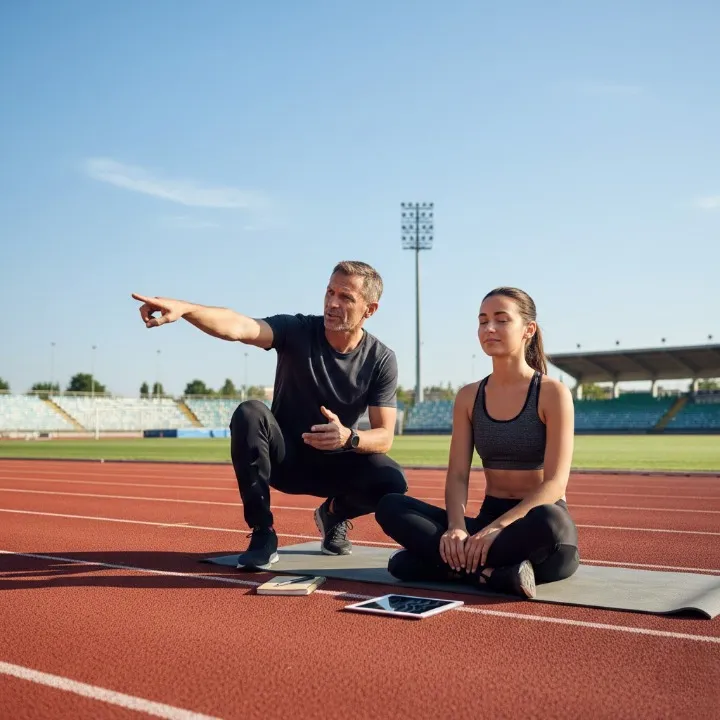
Find a quiet space free from distractions. Use deep breathing or progressive muscle relaxation to reach a state of calm. A relaxed mind is more receptive to vivid imagery.
Phase 2: Multi-Sensory Scripting
Build the scene using all five senses. Do not just “see” the court; hear the squeak of shoes, feel the texture of the ball, and smell the gym floor. This sensory depth is what activates the motor cortex.
Phase 3: Real-Time Execution
Perform the skill in your mind’s eye exactly as you want it to happen in reality. Use a first-person perspective to ensure kinesthetic alignment. Ensure the timing is accurate; use a stopwatch if necessary to match your physical performance time.
Phase 4: Integration of Emotion
Do not sanitize the experience. Include the pressure of the moment and the physical fatigue you will feel. Rehearse your response to these challenges—staying calm, maintaining focus, and pushing through.
Phase 5: Consistency and Review
Dedicate 10-15 minutes daily to this practice. Update your scripts as your skills improve. Just as you wouldn’t expect results from one gym session, visualization requires weeks of consistency to rewire neural pathways.
Barriers to Effective Imagery and Troubleshooting
While visualization is powerful, many athletes encounter obstacles that can diminish its efficacy. Understanding these barriers is the first step toward overcoming them.
Aphantasia and Poor Vividness
Some individuals struggle to form clear mental images. This is often not a lack of ability, but a lack of training. In such cases, athletes should focus on other sensory modalities—like the sound of the sport or the kinesthetic “feel” of the movement. Often, the visual component will follow once the auditory and tactile elements are established.
Lack of Controllability
The most common issue for competitive athletes is “negative imagery,” where the mental tape shows them failing or making mistakes. When this happens, the athlete must “stop, rewind, and restart” the tape. Developing the mental toughness to force the image toward a successful outcome is itself a form of training that translates to better on-field composure.
Technological Frontiers: Biofeedback and Virtual Reality
The future of Sports Psychology: The Power of Visualization in Performance lies in the integration of technology. Biofeedback tools, such as the emWave system, allow athletes to see their heart rate variability in real-time, helping them achieve the “coherence” necessary for deep imagery.
Virtual Reality (VR) is also becoming a primary tool for environmental priming. By immersing an athlete in a 360-degree reconstruction of a stadium, VR provides the visual and auditory cues that make internal visualization more potent. These tools do not replace the mind’s eye but rather act as a “scaffolding” to build more vivid and controllable mental simulations.
Conclusion: The Integrated Athlete
Mastering Sports Psychology: The Power of Visualization in Performance is the final frontier for the modern athlete. The evidence is undeniable: your brain is the most powerful performance enhancer you possess. By leveraging the PETTLEP framework, you can bridge the gap between “knowing” a skill and “owning” it under pressure. Whether you are recovering from an injury, preparing for a championship, or simply looking to refine your technique, the mental blueprint you create today dictates the physical reality you will inhabit tomorrow. Start your 10-minute daily practice now, and watch as your “mental memories” transform into real-world victories
Click Here For More Information: https://ecofiy.com