







Introduction: Why Everyone Dreams of Drifting
Picture this: you’re watching Fast & Furious for the hundredth time, and there’s that moment when the hero slides their car sideways around a corner, smoke billowing from the tires, complete control despite the apparent chaos. Your heart races, and you think, “I want to learn how to drift like that.”
You’re not alone. Drifting captures our imagination because it represents the perfect balance between control and letting go—a dance between physics and skill that looks impossible but becomes addictive once mastered.
In this comprehensive guide, you’ll discover everything needed to safely learn how to drift, from understanding the basic physics to advanced techniques used by professional drift drivers. We’ll cover vehicle preparation, safety considerations, practice locations, and step-by-step instructions that transform you from curious beginner to confident slider.
Whether you dream of competing professionally or simply want to understand this automotive art form, this guide provides the foundation for your drifting journey.
What Is Drifting and Why Does It Matter?
The Science Behind Controlled Slides
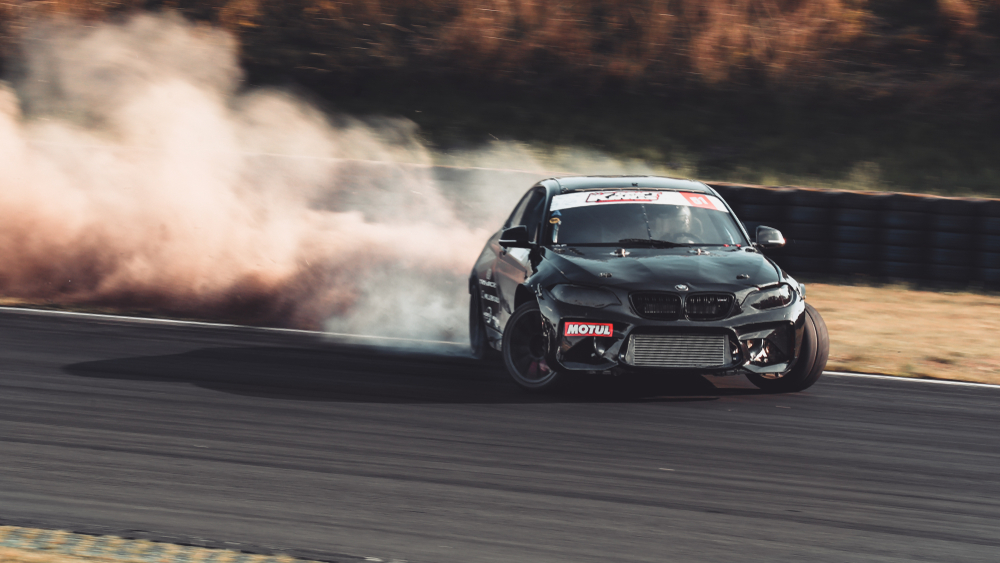
Drifting is a driving technique where you intentionally break rear wheel traction while maintaining control through steering input and throttle modulation. Unlike spinning out or losing control, drifting requires precise balance between multiple vehicle dynamics.
The magic happens when your car’s rear wheels exceed their traction limit while the front wheels maintain enough grip for steering. This creates a controlled slide where the vehicle moves sideways through turns while you maintain directional control through counter-steering and throttle adjustment.
Professional drifting emerged from Japanese mountain racing in the 1970s, where drivers discovered that sliding through corners could sometimes be faster than traditional grip driving on tight, technical roads. Today, it’s evolved into a competitive motorsport judged on style, speed, and precision rather than pure lap times.
Different Types of Drift Techniques
Understanding various drift initiation methods helps you choose the right technique for different situations:
Power-over drifting uses engine power to break rear traction, ideal for powerful rear-wheel-drive vehicles. Clutch-kick drifting involves quickly releasing and engaging the clutch to upset rear wheel grip. E-brake drifting uses the handbrake to lock rear wheels temporarily, perfect for beginners learning basic car control.
Lift-off drifting relies on weight transfer when you suddenly reduce throttle input, while braking drifting uses brake modulation to initiate slides. Each technique has specific applications depending on corner type, vehicle characteristics, and driving conditions.
Essential Requirements: What You Need to Start Learning How to Drift
Vehicle Selection and Preparation
Your vehicle choice dramatically impacts your drifting success and safety. Rear-wheel-drive cars provide the most predictable and controllable drifting experience because power goes directly to the wheels you’re trying to slide.
Popular beginner drift cars include the Nissan 240SX, BMW E36 3-Series, Ford Mustang, and Mazda Miata. These vehicles offer good weight distribution, reliable mechanics, and affordable parts when things inevitably break.
Front-wheel-drive cars can drift using advanced techniques, but they require more skill and provide less predictable behavior. All-wheel-drive vehicles offer unique drifting characteristics but typically need mechanical modifications to achieve sustained slides.
Key vehicle modifications for drifting include:
- Limited-slip differential or welded differential for consistent rear wheel behavior
- Upgraded suspension with adjustable dampers and stiffer springs
- Performance tires with appropriate tread compound
- Brake upgrades to handle repeated hard use
- Safety equipment including roll cage, racing seats, and harnesses
Safety Equipment and Legal Considerations
Never attempt to learn how to drift on public roads. This practice endangers yourself, other drivers, and pedestrians while carrying serious legal consequences including license suspension, vehicle impoundment, and criminal charges.
Legal drifting occurs at designated facilities: race tracks with drift days, dedicated drift tracks, autocross events with drift classes, and private property with proper insurance and safety measures.
Essential safety equipment includes a properly fitted helmet, racing seats with multi-point harnesses, fire extinguisher, and first aid kit. Advanced safety measures involve roll cages, window nets, and racing suits for higher-speed practice sessions.
Step-by-Step Guide: How to Drift for Beginners
Phase 1: Understanding Vehicle Dynamics
Before attempting actual drifts, spend time understanding how your car behaves in various situations. Practice smooth steering inputs, progressive throttle application, and gentle brake modulation in safe environments like empty parking lots.
Learn to feel weight transfer as you accelerate, brake, and turn. This sensitivity becomes crucial when learning how to drift because successful sliding requires precise timing of weight shifts to break and regain traction.
Practice basic car control exercises: figure-8 patterns at increasing speeds, emergency braking from different speeds, and gentle oversteer correction. These fundamental skills build the muscle memory needed for drift control.
Phase 2: Your First Drift Attempts
Start with the handbrake method in a large, empty space with good visibility and no obstacles. Begin at low speeds (15-20 mph) approaching a gentle turn.
Step-by-step first drift:
- Approach the turn at moderate speed in second gear
- Turn the steering wheel toward the corner
- Pull the handbrake briefly while maintaining throttle
- As the rear slides out, counter-steer in the opposite direction
- Release the handbrake and modulate throttle to maintain the slide
- Straighten the steering as you exit the turn
Expect multiple attempts before achieving sustained slides. Initial drifts typically last only seconds before you either regain grip or lose control. This is completely normal—drifting requires developing new neural pathways for car control.
Phase 3: Developing Throttle Control
Once you can initiate basic handbrake drifts, focus on throttle modulation to maintain slides. This represents the biggest challenge when learning how to drift because throttle control requires extreme sensitivity.
Too much throttle spins the tires uselessly or causes wild oversteer. Too little throttle ends the drift prematurely. The perfect amount varies constantly based on speed, turn radius, surface conditions, and vehicle characteristics.
Practice maintaining steady throttle positions during slides, then gradually experiment with increasing and decreasing power mid-drift. Advanced drivers use throttle like a volume control, constantly adjusting power delivery to maintain optimal slide angles.
Phase 4: Advanced Drift Techniques
Power-over initiation becomes possible once you master basic throttle control. This technique uses engine power alone to break rear traction, requiring precise timing and progressive throttle application.
Approach corners at higher speeds, turn in normally, then smoothly apply power until the rear wheels overcome grip. Immediately counter-steer and modulate throttle to maintain the desired slide angle.
Clutch-kick drifting adds another tool for slide initiation and maintenance. Quickly depressing and releasing the clutch while maintaining throttle creates a sudden power surge that breaks rear traction. This technique requires perfect timing and can stress drivetrain components.
Weight transfer techniques use vehicle dynamics to initiate slides without handbrake or excess power. Scandinavian flicks involve rapid steering inputs to shift vehicle weight, while lift-off techniques use sudden throttle reduction to unload rear wheels.
Common Mistakes and How to Avoid Them
Overcorrection and Target Fixation
New drift students often make excessive steering inputs when the car begins sliding. This overcorrection leads to tank-slapper oscillations that end in spins or loss of control.
The solution involves developing smooth, progressive steering inputs and trusting the physics. Small corrections often prove more effective than large ones when learning how to drift properly.
Target fixation represents another dangerous tendency where drivers focus on obstacles instead of their intended path. Your car tends to go where you look, so maintaining visual focus on exit points rather than barriers dramatically improves safety and success rates.
Inappropriate Speed and Surface Selection
Many beginners attempt drifting at speeds far beyond their skill level. High-speed mistakes leave no time for correction and often result in serious accidents.
Start slowly and gradually increase speeds as your skills develop. Professional drift drivers spend years perfecting their craft—expecting immediate high-speed success sets you up for failure and potential injury.
Surface selection dramatically impacts drift behavior. Wet surfaces reduce required power but also reduce available grip for control. Loose surfaces like gravel create unpredictable slides. Ideal learning surfaces provide consistent, predictable grip levels.
Neglecting Vehicle Maintenance
Drifting stresses every vehicle system beyond normal driving limits. Tires, brakes, suspension, drivetrain, and cooling systems all work harder during drift sessions.
Regular maintenance becomes crucial when learning how to drift. Check tire pressures and wear patterns after each session. Monitor brake pad thickness and fluid condition. Inspect suspension components for wear or damage.
Cooling system maintenance prevents overheating during extended sliding sessions. Engine oil and differential fluid degrade quickly under drift conditions and require more frequent changes.
Advanced Drifting Techniques and Competitive Elements
Transitioning and Linking Corners
Once you master single-corner drifts, linking multiple turns creates flowing, continuous slides that define advanced drifting. This requires planning ahead, managing speed through transitions, and maintaining momentum between corners.
Transition techniques involve shifting vehicle weight and changing slide direction between corners. Successful transitions maintain sliding throughout direction changes, creating seamless car control that appears effortless to observers.
Practice simple S-curves before attempting complex multi-turn sequences. Each transition requires precise timing of steering, throttle, and weight transfer to maintain optimal slide angles throughout the entire sequence.
Competition Standards and Judging Criteria
Professional drifting competitions judge performance on multiple criteria rather than pure speed. Line refers to your path through designated zones and proximity to track boundaries. Angle measures how sideways your car travels relative to the racing line.
Speed considers your velocity through drift zones—higher speeds demonstrate greater skill and commitment. Style encompasses smoothness, aggression, and overall visual impact of your driving.
Understanding these criteria helps focus practice sessions on competition-relevant skills. Even recreational drifters benefit from these standards as they encourage well-rounded skill development and safer driving practices.
Professional Development Pathways
Serious drift students can pursue professional instruction through specialized driving schools, competition licenses through sanctioning bodies like Formula Drift, and structured practice through local drift organizations.
Professional drift instruction accelerates learning while maintaining safety focus. Experienced instructors identify bad habits early and provide personalized coaching that self-taught drivers often miss.
Competition participation, even at grassroots levels, provides motivation, skill benchmarks, and community connections that enhance your drifting journey. Many professional drivers started at local events and progressed through regional and national competitions.
Safety Protocols and Risk Management
Track Day Preparation and Procedures
Legitimate drift events require thorough vehicle inspection, safety briefing attendance, and adherence to strict rules designed to protect all participants. Arrive early for tech inspection and driver meetings.
Pre-session vehicle checks include tire condition, brake function, steering response, safety equipment security, and fluid levels. Most events require specific safety equipment and vehicle modifications for participation.
Session protocols typically include designated practice groups based on skill level, mandatory cool-down periods, and flag systems for communication. Understanding and following these protocols ensures everyone’s safety and enjoyment.
Emergency Procedures and Incident Response
Despite best safety practices, incidents can occur during drift practice. Knowing proper emergency procedures protects you and others when things go wrong.
If you lose control: Remove your foot from all pedals, grip the steering wheel firmly, and try to point the car toward open space. Don’t attempt to save an unsaveable situation—sometimes accepting a spin prevents more serious consequences.
If you see an incident: Immediately slow down, signal other drivers if possible, and follow track emergency procedures. Never stop to help unless specifically trained and authorized—untrained assistance often worsens situations.
Post-incident protocols usually require reporting to event officials, vehicle re-inspection before continuing, and honest assessment of contributing factors to prevent repeat occurrences.
Building Your Drift Community and Continuing Education
Finding Local Drift Groups and Mentorship
The drifting community generally welcomes newcomers who show respect, willingness to learn, and commitment to safety. Local drift groups provide invaluable support, shared knowledge, and practice opportunities.
Online communities offer 24/7 access to technical advice, event information, and builds documentation. Popular platforms include specialized forums, social media groups, and video channels focused on drift education.
Mentorship relationships with experienced drifters accelerate skill development while providing safety oversight. Many seasoned drivers enjoy sharing knowledge with respectful students who demonstrate genuine interest in proper learning.
Continuing Education and Skill Development
Learning how to drift represents a journey rather than a destination. Even professional drivers continuously refine their techniques, adapt to new vehicles, and explore advanced applications.
Video analysis of your driving reveals areas for improvement that you might miss during actual sessions. Many drivers use onboard cameras to review sessions and identify specific areas for focus.
Cross-training in other motorsports disciplines enhances overall car control skills that benefit drifting. Autocross, road racing, rally driving, and karting all develop complementary skills that improve drift performance.
Technical education about vehicle dynamics, tire behavior, and suspension tuning helps you understand why certain techniques work and how to adapt them to different situations and vehicles.
Conclusion: Your Journey to Mastering Controlled Chaos
Learning how to drift transforms you from a passive driver into an active participant in the physics of motion. This journey challenges your reflexes, rewards precision, and connects you with a global community of enthusiasts who share your passion for controlled automotive artistry.
Remember that every professional drift driver started exactly where you are now—curious, excited, and probably a little intimidated by the challenge ahead. The key lies in respecting the learning process, prioritizing safety above all else, and maintaining patience as your skills develop through consistent practice.
Your first successful drift will feel like pure magic—that moment when everything clicks, the car responds to your inputs, and you experience true automotive harmony. That feeling becomes addictive and drives the pursuit of ever-greater precision and style.
Start by finding a legitimate, safe environment for practice. Connect with local drift communities for support and guidance. Invest in proper safety equipment and vehicle preparation. Most importantly, commit to learning the right way from the beginning rather than developing bad habits that become difficult to unlearn.
The automotive world needs more skilled, safety-conscious drift drivers who understand that true mastery comes from discipline, respect, and continuous learning. Take that first step toward joining this incredible community—your future sliding self will thank you for starting the journey properly.
Ready to begin your drift adventure? Find a local track day, connect with experienced drivers, and discover why millions of enthusiasts consider drifting the ultimate expression of driving skill and automotive passion.