







The pursuit of the African Tigerfish, Hydrocynus vittatus, represents the apex of freshwater game fishing within the southern African sub-continent. Known colloquially as the “striped water dog,” this species is not merely an angling target but a flagship predator whose population health reflects the integrity of the riverine and lacustrine ecosystems of the Lowveld and the greater Zambezi catchment area. For luxury travel operators such as AfriG Travel, the term “tiger fishing south africa” serves as a critical nexus for high-intent adventurers seeking world-class experiences that combine professional-grade angling with the exclusivity of African safaris. This report provides an exhaustive examination of the tiger fishing landscape, offering deep insights into the biological imperatives of the species, the geographical strongholds of Lake Jozini and the Komati River, and the sophisticated logistical frameworks required to deliver premier angling expeditions.
Taxonomic and Biological Profile of Hydrocynus vittatus
The Hydrocynus vittatus is a member of the Alestidae family, characterized by its formidable physical adaptations and aggressive predatory niche. The species is endemic to Africa, with its southernmost natural distribution reaching the Pongola River system in South Africa. Understanding the physiological mechanisms of this “freshwater monster” is essential for developing effective angling strategies and sustainable management policies.
Morphological Adaptations for Apex Predation
The most distinctive feature of the tigerfish is its dentition. The species possesses eight to fourteen large, interlocking conical teeth per jaw, which are exposed even when the mouth is closed. These teeth are set into a bony, unyielding jaw structure that evolved to facilitate the shearing of baitfish but presents a significant challenge for the modern angler in terms of hook penetration. The fish’s body is fusiform and streamlined, supported by a powerful, deeply forked caudal fin that enables explosive bursts of speed reaching up to 50 $km/h$.
| Feature | Biological Description | Angling Implication |
| Dentition | Conical, interlocking, and self-replacing |
Requires steel traces; limits hook penetration |
| Jaw Structure | Bony, minimal soft tissue |
Necessitates extremely sharp hooks and firm hookset |
| Lateral Line | Highly sensitive pressure detection |
Effective hunting in murky or turbid wate |
| Coloration | Silver scales with dark horizontal stripes |
Visual camouflage in reed beds and structured wate |
The tigerfish is primarily an ichthyophagous predator, meaning its diet consists almost exclusively of other fish. In the South African context, its primary prey includes various species of Tilapia (Kurper), Barbel (Catfish), and smaller cyprinids. Research indicates that tigerfish are opportunistic and will even prey on smaller members of their own species if food is scarce, a behavior that guides the design of many larger “cannibalistic” lure patterns.
Environmental Determinants and Seasonal Angling Dynamics
The success of a tiger fishing expedition is dictated by complex interactions between water temperature, clarity, lunar cycles, and seasonal spawning migrations. Unlike many temperate species, the tigerfish’s metabolic rate is highly sensitive to thermal shifts, which in turn influences its aggression and feeding frequency.
The Influence of Temperature and Water Clarity
Tigerfish are fundamentally warm-water predators. In South Africa, the species becomes most active when water temperatures exceed $20^\circ\text{C}$. During the summer months, which constitute the peak feeding season, the fish’s metabolism is at its zenith, leading to the ferocious strikes for which the species is famous.
However, the summer rains also introduce a significant variable: turbidity. High sediment runoff from the Pongola and Komati river catchments can reduce visibility, forcing the fish to rely more on their lateral line and olfactory senses. In contrast, the winter months bring clear, cool water. While visibility is excellent—ideal for sight-casting and fly fishing—the lower temperatures can make the fish sluggish and less inclined to chase fast-moving lures.
Lunar Cycles and the “Golden Hour”
Field observations from premier lodges like Mavungana Flyfishing suggest that lunar phases significantly impact hunting success. Tigerfish struggle to hunt in complete darkness; therefore, they are often most ravenous during the sunrise and sunset periods following a new moon.This “Golden Hour” is the primary window for top-water action, as predators move into the shallows to ambush baitfish in the low light.
| Season | Water Condition | Tigerfish Behavior | Strategic Approach |
| Early Spring (Aug-Sept) | Clear, warming | Increasing activity |
Optimal for fly fishing and sight castin |
| Peak Summer (Oct-Jan) | Warm, often turbid | High aggression |
Focus on structure, noisy lures, and live bai |
| Late Autumn (Feb-May) | Cooling, clearing | Pre-winter feeding |
Deep diving lures and aggressive retrieve |
| Winter (June-July) | Clear, cold | Sluggish, deep |
Slow presentations and natural bait |
Geographical Analysis of South African Tiger Fishing Hubs
The distribution of tigerfish in South Africa is ecologically restricted to the eastern Lowveld, primarily within the KwaZulu-Natal and Mpumalanga provinces. Two locations stand as the premier venues for domestic angling: Lake Jozini and the Komati River.
Lake Jozini (Pongolapoort Dam): The Southernmost Frontier
Lake Jozini is the southernmost natural habitat for the tigerfish in Africa. Spanning approximately 16,000 hectares, this reservoir is surrounded by private and provincial game reserves, creating a unique environment where anglers fish in the presence of the “Big Five”.
The topography of Jozini is divided into distinct zones that influence fish distribution. The “Poort” or Gorge section features steep basaltic drop-offs and crystal-clear water reaching depths of 60 meters. Conversely, the western shores consist of extensive mudflats and submerged islands, which serve as critical breeding grounds for baitfish like Mozambique Tilapia. The Pongola River, which feeds the lake, is characterized by submerged timber and old river channels, providing ideal ambush points for large solitary “trophy” tigers.
The Komati River: Serenity and Proximity
The Komati River in Mpumalanga offers a riverine alternative to the stillwater experience of Jozini. Located near the Crocodile Bridge gate of the Kruger National Park, the Komati is renowned for its clear water and the presence of significant specimens, with local records reaching up to 12kg.
The Komati’s appeal lies in its year-round warmth and the tranquility of its surroundings. The river flows through riverine bush and rolling foothills, offering a picturesque setting for both boat-based and bank-based angling.Because the Komati is a moving water system, anglers must adapt their tactics to target eddies, current seams, and submerged rock formations where tigerfish hold to minimize energy expenditure while waiting for prey.
Technical Angling Mastery: Strategies for the Striped Water Dog
Catching a tigerfish is widely regarded as one of the most challenging feats in freshwater angling due to the high rate of “spit” hooks and the sheer power of the fish’s initial run. Success requires a combination of specialized tackle and precise technique.
Fly Fishing: The Ultimate Challenge
Fly fishing for tigerfish has evolved from a niche pursuit into a global draw. The aggressive “take” of a tiger on a fly is often described as “bone-shaking”.
-
Terminal Tackle: An 8-weight to 9-weight fast-action rod is the standard, paired with a large-arbor reel featuring a high-quality disc drag.
-
Lines: While floating lines are used for surface poppers during the summer, the most effective tool is a fast-sinking line (DI7 or shooting heads) that can reach the strike zone 4 to 10 meters deep.
-
The “Strip Strike”: The most critical technical skill is the strip strike. Anglers must keep the rod tip pointed directly at the fish and pull the line hard with the non-rod hand to drive the hook into the bony jaw. Lifting the rod—the traditional trout strike—will invariably result in a lost fish.
Conventional and Spinning Tactics
Conventional tackle is often more productive for targeting larger specimens or fishing in deeper, turbid water.
-
Lures: Shiny silver or copper spoons (such as the Effzet or Mepps Syclops) are highly effective at reflecting light in murky water. Surface plugs and deep-diving crankbaits also produce results, provided the treble hooks are replaced with high-strength single hooks.
-
Live and Dead Bait: Tilapia and sardines are the preferred natural baits. Using a circle hook is strongly recommended to ensure a secure hook-set in the corner of the mouth, which facilitates safe release.
-
The Steel Trace: Regardless of the method, a multi-strand steel trace or piano wire (30-40lb) is mandatory. The razor-sharp teeth of a tigerfish will slice through monofilament or fluorocarbon instantly.
| Gear Category | Specification | Primary Reason |
| Rod |
7′ Medium-Heavy Spinnin |
Necessary for powerful hooksets and fighting leverage |
| Reel |
3000-4000 High-Speed Dra |
Counteracts explosive runs and rapid direction changes |
| Line |
30-40lb Brai |
Zero stretch allows for immediate energy transfer to the hook |
| Leader |
6-12″ Steel Trac |
Prevents bite-offs from interlocking conical teeth |
| Hooks |
Chemically Sharpened Single |
Maximizes penetration in bony, calcified jaw structures |
The AfriG Travel Portfolio: Comparative Analysis of Luxury Venues
AfriG Travel positions itself as a premier curator of “world-class” tiger fishing adventures. While South Africa provides the southernmost frontier, the AfriG network extends deep into the Zambezi and Chobe systems of Zambia, Namibia, and Botswana, where the “giants” of the species are found.
Analyzing Regional Strongholds
The Zambezi River is the spiritual home of the tigerfish, with different sections offering distinct angling experiences. The Upper Zambezi is often characterized as a “number fishery,” where high volumes of fish in the 2lb to 10lb range are common, while the Lower Zambezi is renowned for producing “monsters” exceeding 20lbs.
| Lodge Property | Region | Target Weight Range | 2025 Daily Rate (Per Person) |
| Zambelozi Lodge | Upper Zambezi (Zambia) | 2 lbs – 17 lbs |
R 4,990 |
| Shackletons Lodge | Upper Zambezi (Zambia) | Trophy Focus (up to 24 lbs) |
R 5,200 |
| Shamwari Houseboat | Chobe/Zambezi (Namibia) | Trophy Tiger & Bream |
R 4,490 |
| Galamuka Adventures | Lower Zambezi (Zambia) | Large Tiger & Vundu |
R 4,200 |
| Muchenje River Lodge | Caprivi (Namibia) | Multi-species predatory focus |
R 4,499 |
| Sekoma Island Lodge | Zambezi (Namibia/Zambia) | Premier Fly/Lure venue |
R 4,950 |
Operational Logistics and Inclusions
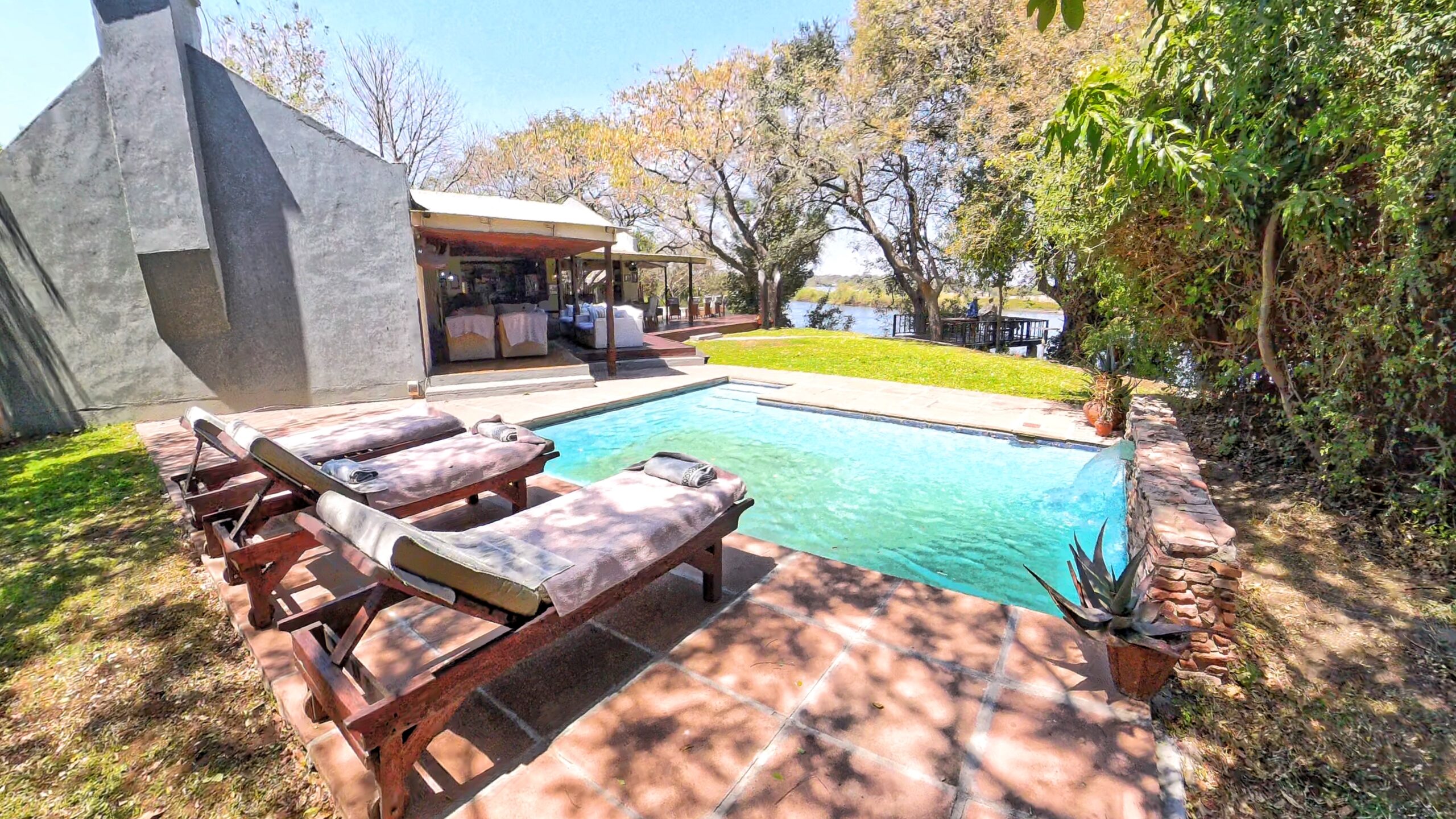
Luxury angling trips are typically offered on a “full-board” basis. A standard package from AfriG Travel includes luxury tented or thatched accommodation, all meals and snacks, and daily guided fishing. Professional guides are a critical inclusion; they provide the boat, fuel (typically 20-25 liters per day), and the expert local knowledge required to navigate complex river channels.
It is essential for travelers to account for the “Fish Ban.” In Zambia and Namibia, an annual fishing closure occurs from December to March to protect the species during its peak spawning period. During this time, high-end operators often pivot to land-based safaris or specialized birding excursions, as the riverine ecosystems remain vibrant despite the angling hiatus.
SEO and Digital Positioning: Dominating the “Tiger Fishing South Africa” Search Intent
For a website like AfriG Travel, SEO is not merely about keyword density but about demonstrating “Expertise, Authoritativeness, and Trustworthiness” (E-A-T) in the niche of African angling. The primary keyword “tiger fishing south africa” must be supported by Latent Semantic Indexing (LSI) terms that align with the user’s search journey.
Target Keyword Clusters and LSI Integration
An effective SEO strategy for AfriG Travel involves clustering keywords around three main pillars: location, technical gear, and luxury logistics. By integrating these terms into a fluid narrative, the site can capture traffic from both casual researchers and serious anglers ready to book.
-
Location-Based Keywords: “Lake Jozini fishing”, “Pongolapoort Dam”, “Komati River tiger fishing”, “Upper Zambezi lodges”, “Caprivi Strip safaris”.
-
Action-Oriented Keywords: “Fly fishing for tigerfish”, “catch and release South Africa”, “best time for tiger fishing”, “tiger fishing tackle list”.
-
Logistics and Pricing: “Tiger fishing packages 2025”, “luxury fishing safari”, “Zambezi fishing rates”, “how to catch tiger fish”.
The Role of High-Quality Long-Form Content
Search engines prioritize comprehensive guides that answer multiple user questions on a single page. A report that covers everything from “what flies to use” to “how to get to Lake Jozini” satisfies the user’s intent and reduces bounce rates. For AfriG Travel, the brand tone should remain “professional, adventurous, and enthusiastic,” positioning their offerings as “World Class” and “premier”.
Ethical Angling and Conservation Mandates
The future of tiger fishing in South Africa is inextricably linked to the success of catch-and-release practices. The tigerfish is a protected species, and its value as a tourism asset far outweighs its value as a food source.
Catch and Release Best Practices
Modern angling ethics demand that the fish be handled with the utmost care. Using soft nets and avoiding lifting the fish vertically out of the water are standard procedures.
-
Circle Hooks and Barbless Options: Encouraged by organizations like the Federation of Southern African Flyfishers (FOSAF), the use of barbless hooks or circle hooks reduces tissue damage and shortens the unhooking process.
-
Threatened or Protected Species (TOPS): In South Africa, keeping a tigerfish requires a specific TOPS permit. Because most reserves and lodges have a mandatory catch-and-release policy, the majority of the industry operates on the principle of “leave no trace” to ensure the sustainability of the population.
The Impact of Community-Based Conservation
Sustainable angling provides a viable economic alternative for local communities. Lodges often employ local residents as guides, trackers, and hospitality staff, fostering a local vested interest in protecting the river systems from poaching and environmental degradation. This socio-economic ripple effect is a key component of the “safari story” that AfriG Travel promotes to its international clientele.
Operational Risk Management: Safety on African Waters
Angling in the habitats of the tigerfish involves inherent risks that must be managed by professional operators. These waters are the domain of the Nile crocodile and the hippopotamus, two of Africa’s most dangerous animals.
Navigating the Megafauna
Safety protocols are a mandatory part of any guided excursion. Hippos are notoriously territorial, especially in the narrowed channels of the Upper Zambezi or the reed beds of Jozini.
-
Boat-Based Advantage: Fishing from a boat provides a critical buffer between the angler and shoreline predators. Shore angling is strictly prohibited in many game reserve areas due to the high risk of crocodile ambushes
-
Weather Vigilance: Massive bodies of water like Lake Jozini can experience sudden, violent thunderstorms and high winds. Professional skippers are trained to monitor the Obombo and Lebombo mountain ranges for signs of approaching weather systems and to return to harbor immediately when conditions deteriorate.
-
Handling the Fish: The tigerfish itself is a hazard. Their teeth are razor-sharp, and their thrashing can cause deep lacerations. Anglers are advised to use gloves and long-nosed pliers to handle the fish and to never put their hands near the mouth.
Conclusion: The Strategic Outlook for the 2026 Angling Season
The South African tiger fishing industry is entering a period of refinement and stabilization. With the expansion of luxury lodge options and the professionalization of guiding services, the “striped water dog” has become the centerpiece of a sophisticated tourism ecosystem. For AfriG Travel, the opportunity lies in providing a seamless, high-end bridge between the technical demands of the sport and the comfort of a luxury safari.
As environmental awareness grows, the focus on sustainable, catch-and-release angling will continue to define the market. By integrating deep ecological insights with technical mastery and professional logistical management, operators can ensure that “tiger fishing south africa” remains a bucket-list experience for the world’s most discerning anglers. The combination of raw predatory power and the untamed beauty of the African Lowveld ensures that the tigerfish will remain the ultimate prize in the freshwater domain.