






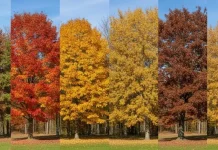



Why Do Leaves Change Color? The Science Behind Autumn Foliage
The annual transformation of temperate forest canopies from a monolithic green to a complex mosaic of crimson, gold, and bronze represents one of the most sophisticated biological transitions in the botanical world. While frequently categorized as an aesthetic phenomenon for the purpose of seasonal tourism, the transition known as autumn foliage is fundamentally a survival mechanism driven by internal biochemical clocks and external environmental pressures. This process, scientifically termed leaf senescence, involves the systematic dismantling of the photosynthetic apparatus to facilitate nutrient recovery, ensuring the perennial survival of the host organism through the metabolic challenges of the winter dormancy period.

The Biological Foundation of Leaf Functionality
To understand the cessation of leaf function, one must first establish the baseline of summer physiological activity. Throughout the growing season, the leaf serves as a biological factory, utilizing the structural integrity of the thylakoid membranes within chloroplasts to facilitate the conversion of solar energy into chemical energy.
The Dominance of Chlorophyll
The primary agent in this energy-harvesting process is chlorophyll, a pigment that absorbs light primarily in the blue and red wavelengths of the visible spectrum while reflecting green. During the long days of spring and summer, the synthesis of chlorophyll is a continuous requirement. Because chlorophyll is an unstable molecule, it breaks down rapidly under the same high-intensity light it harvests, necessitating a constant cycle of regeneration fueled by the tree’s nutrient supply, particularly nitrogen.
This constant production ensures that the concentration of chlorophyll remains high enough to mask other pigments that are inherently present within the leaf tissue. These accessory pigments, primarily carotenoids and xanthophylls, assist in light harvesting and provide photoprotection against ultraviolet damage even during the peak of summer, yet they remain invisible to the naked eye under the overwhelming green shadow of chlorophyll.
| Physiological Component | Summer State | Autumn Transition | Final Winter Status |
| Chlorophyll | Continuous synthesis; dominant green mask. | Production halts; rapid breakdown into metabolites. | Absent in deciduous; maintained in evergreens. |
| Carotenoids | Present but masked; assist in light harvesting. | Revealed as chlorophyll degrades; remain stable. | Eventually break down after leaf drop. |
| Anthocyanins | Absent in most species; synthesized only in rare varieties. | Synthesized de novo from trapped sugars. | Leached by rain or lost in leaf drop. |
| Leaf Structure | Fully hydrated; vascular pathways open. | Abscission layer forms; vessels constrict. | Detached; leave behind suberized leaf scar. |
The Photosynthetic Equation and Energy Storage
The efficiency of this factory is dictated by the availability of three core resources: water, carbon dioxide, and sunlight. Through the process of photosynthesis, the tree synthesizes glucose, which is then utilized for immediate growth or converted into starch for long-term storage. The chemical reaction can be expressed as:
$$6CO_2 + 6H_2O + \text{solar energy} \rightarrow C_6H_{12}O_6 + 6O_2$$
As the growing season concludes, the tree performs a metaphorical cost-benefit analysis. Maintaining large, moisture-rich leaves during periods of freezing temperatures and diminished light is energetically prohibitive. Consequently, the tree initiates a controlled shutdown, transitioning from an anabolic state of growth to a catabolic state of resorption.

Environmental Triggers of the Senescence Cascade
The shift from summer vitality to autumn dormancy is not a random occurrence but a precisely timed event regulated by photoperiodism and modulated by temperature and moisture.
Photoperiodism: The Unfailing Biological Clock
While weather patterns fluctuate from year to year, the length of the day—or more accurately, the length of the night—remains the only consistent environmental cue. Deciduous trees possess light-sensitive receptors, such as phytochromes, that monitor the increasing duration of darkness. When the night length reaches a critical threshold—a point that varies by species and latitude—it triggers a hormonal shift within the plant.
This hormonal signal initiates the physical changes required for leaf detachment. Unlike temperature, which can vary wildly, the photoperiod ensures that the tree begins its preparations early enough to avoid the catastrophic damage that an unpredicted early freeze might inflict on active, hydrated tissues. This is particularly vital in higher latitudes where the transition from summer to winter can be precipitous.
The Role of Temperature and Moisture
If photoperiodism sets the schedule, temperature and moisture act as the conductors of the symphony, determining the pace and brilliance of the color change. The ideal conditions for a vibrant display involve a wet growing season followed by a period of sunny, warm autumn days and cool, crisp nights that remain above the freezing point.
Low temperatures above freezing are particularly critical for the synthesis of anthocyanins—the pigments responsible for red and purple hues. Conversely, early frosts can be detrimental, destroying the delicate cellular machinery required to produce these colors and causing the leaves to shrivel and drop prematurely.
| Environmental Factor | Impact on Foliage Color | Physiological Rationale |
| Increasing Night Length | Primary trigger for senescence onset | Ensures consistent timing regardless of weather. |
| Cool Nights (Above Freezing) | Enhances red and purple brilliance | Promotes anthocyanin synthesis and traps sugars. |
| Sunny Days | Increases sugar production | Provides materials for red pigment development. |
| Severe Drought | Dulls colors; triggers early drop | Prioritizes survival by shedding leaves to save water. |
| Early Frost | Ruination of red pigments | Damages cells and halts biochemical production. |
| High Soil Moisture | Promotes vibrant, healthy leaves | Enables robust pigment production and healthy senescence. |
The Mechanics of the Abscission Layer
As the tree prepares for dormancy, it must solve a fundamental problem: how to detach the leaf without leaving an open wound that would be susceptible to infection or excessive water loss. The solution is the formation of the abscission layer.
At the base of the leafstalk, or petiole, a specialized zone of cells begins to differentiate. This layer consists of two distinct parts: a distal layer that becomes soft and thin-walled, and a proximal layer that becomes suberized—corky—to form a protective seal on the branch. As this layer develops, it gradually constricts the vascular tissues—the xylem and phloem—that transport water and nutrients between the leaf and the rest of the tree.
This constriction creates a biochemical trap. Sugars produced during the remaining sunny days are trapped within the leaf blade because the export routes—the phloem—are blocked, while water continues to enter at a reduced rate through the xylem. This accumulation of sugar is the essential catalyst for the final, most brilliant stage of the color change, particularly for trees that produce red and purple hues.
The Biochemical Palette: A Study of Pigments
The visual transition of autumn is essentially a story of four chemical groups: chlorophylls, carotenoids, anthocyanins, and tannins. Each plays a specific role in the tree’s transition from summer activity to winter rest.
Carotenoids and Xanthophylls: The Hidden Glow
Carotenoids, which produce oranges, and xanthophylls, which produce yellows, are present in the leaf throughout the entire growing season. Their primary function during the summer is to assist chlorophyll by absorbing energy from wavelengths it cannot reach and by dissipating excess energy that might otherwise damage the leaf’s delicate internal structures.
Because these pigments are more chemically stable than chlorophyll, they do not break down as quickly when the tree stops producing replacement molecules. As the green chlorophyll fades, these hidden colors are unmasked. This explains why trees like the quaking aspen, ginkgo, and hickory consistently turn yellow or gold year after year; they possess high concentrations of carotenoids and do not typically produce the red-inducing anthocyanins.
Anthocyanins: The Autumn-Born Reds
Unlike carotenoids, anthocyanins are generally not present in the leaves during the summer months. Instead, they are synthesized de novo in the autumn as a response to the build-up of trapped sugars and exposure to bright light.
The production of anthocyanin is an energetically expensive process for a tree that is otherwise trying to conserve resources. This suggests that the red color serves a vital physiological purpose rather than being a mere byproduct of decay. The brilliance of the red depends on the pH of the cell sap; acidic sap tends to produce bright reds, while more alkaline sap can result in purplish or even blue tones.
Tannins: The Final Descent into Brown
Tannins represent the final stage of leaf chemistry. These bitter, astringent compounds are often present throughout the year as a defense against herbivores and pathogens. Because they are highly stable and resistant to decay, they remain in the leaf tissue long after the more vibrant pigments have broken down. For trees like many oak species and American beeches, tannins dominate the late-season display, resulting in rich bronzes and deep browns that often persist on the tree through the winter—a condition known as marcescence.
Nutrient Resorption: The Strategic Recovery
The most critical aspect of leaf senescence from an ecological perspective is nutrient resorption, also known as retranslocation. Before a leaf is discarded, the tree attempts to salvage as much as possible of the nitrogen, phosphorus, and potassium stored within the leaf tissue.
The Efficiency of the Recovery Process
This recovery is essential for the tree’s health the following spring, as it provides the initial bank of nutrients required to produce new buds and leaves before the root system is fully active in the warming soil. Research indicates that different species exhibit varying levels of resorption efficiency. Factors such as the timing of the first frost play a major role in this efficiency. If a sudden freeze kills the leaf before the resorption process is complete, the tree loses those valuable nutrients to the forest floor.
| Tree Species | Nitrogen Resorption Efficiency (%) | Phosphorus Resorption Efficiency (%) | Strategy Type |
| Birch (Betula pendula) | 69% | 55% | Early-and-steady resorption. |
| Ash (Fraxinus excelsior) | 36% | 37% | Late-and-fast resorption. |
| Lime (Tilia cordata) | 48% | 59% | Conservative leaf trait strategy. |
| Oak (Quercus robur) | 52% | 45% | Marcescent/Late-season retention. |
The Role of Pigments in Resorption
There is a hypothesized correlation between the presence of anthocyanins and the efficiency of nutrient resorption. This leads to the photoprotection hypothesis, which suggests that the red pigments act as a metabolic sunscreen. As chlorophyll breaks down, the leaf’s internal machinery becomes vulnerable to damage from high-energy sunlight. By producing anthocyanins, the leaf shields itself, allowing the remaining biological processes to continue long enough to maximize the export of nitrogen and other minerals back into the tree’s trunk and roots.
Evolutionary Theories: The Purpose of the Display
The striking colors of autumn have prompted significant debate within the scientific community regarding their evolutionary advantage. If the primary goal of the tree is nutrient recovery, why invest energy in vivid displays?
The Photoprotection Hypothesis
As previously discussed, this theory posits that anthocyanins protect the leaf from photo-oxidative stress. During the cold, bright days of autumn, the rate of photon absorption by the leaf can exceed its capacity to process that energy, especially as the carbon-fixing systems are being dismantled. Anthocyanins quench reactive oxygen species (ROS) and filter out harmful light, ensuring that the catabolic pathways of resorption can operate without being short-circuited by sun damage.
The Coevolution and Aposematic Signal Hypothesis
An alternative theory, known as the handicap principle or the coevolution hypothesis, suggests that autumn colors serve as a warning to insects. Many insects, particularly aphids, migrate to trees in the fall to lay their eggs. A tree that can produce intense red coloration may be signaling its superior health and high levels of chemical defenses.
According to this theory, the color tells the insects that the tree is healthy enough to waste energy on this display, and it will likely have the chemical weapons to kill offspring in the spring. By choosing a less colorful and presumably weaker tree, the insects might avoid a host that would ultimately prove fatal to their larvae. While intriguing, this theory remains debated, as experimental evidence shows that insect responses to color are inconsistent across different species and environments.
Regional Variations and Species-Specific Patterns
The diversity of autumn foliage is largely a result of the genetic makeup of different tree species, which dictates the types and concentrations of pigments they are capable of producing.
The Maples: Masters of the Spectrum
Maples are perhaps the most celebrated of the autumn trees due to their wide range of colors. Sugar maples are frequently regarded as the standard of the season, often displaying a gradient of yellow, brilliant orange, and scarlet on the same tree. Their high concentration of anthocyanins and long leaf retention make them a staple of the Northeastern United States and Canada. Red maples often turn a deep, vibrant crimson, though individual variations can lead to yellow or orange hues depending on soil acidity and light exposure.
The Oaks and Beeches: Late-Season Resilience
Oaks generally peak later in the season and are characterized by more subdued tones. While some, like the Northern Red Oak, can show russet or dull red colors, many oaks transition directly into tans and browns due to high tannin content. American beeches similarly lean toward yellow and bronze, with their leaves often remaining on the branches long after other hardwoods have gone bare—a condition that provides visual interest through the winter months.
The Western Gold: Aspens and Larches
In the Western United States and Canada, the autumn display is dominated by the golden hues of quaking aspens and cottonwoods. These trees lack the genetic programming to produce anthocyanins, meaning their display is a pure unmasking of carotenoids. In the Pacific Northwest and the Rockies, the Western Larch provides a unique spectacle as one of the few deciduous conifers, turning a brilliant needle-gold before shedding its foliage for the winter.
| Tree Genus/Species | Typical Fall Color | Dominant Pigment | Notes |
| Sugar Maple (Acer saccharum) | Scarlet, Orange, Gold | Anthocyanin & Carotenoid | High anthocyanin concentration; colors last 3+ weeks. |
| Quaking Aspen (Populus tremuloides) | Brilliant Yellow, Gold | Carotenoid (Xanthophyll) | Dominant in Western US/Rockies. |
| Black Tupelo (Nyssa sylvatica) | Scarlet, Purple, Yellow | Anthocyanin | Multi-color gradient; thrives in wet soils. |
| Northern Red Oak (Quercus rubra) | Russet-Red, Brown | Tannin & Anthocyanin | Holds leaves until winter; supports wildlifestyle. |
| Sweetgum (Liquidambar styraciflua) | Maroon, Purple, Red | Anthocyanin | Star-shaped leaves; fiery red in late fall. |
| Ginkgo (Ginkgo biloba) | Saffron Yellow | Carotenoid | Unique fan-shaped leaves; drops all at once. |
| Hickory (Carya spp.) | Golden Bronze, Yellow | Carotenoid | Consistent yellow year-to-year. |
The Impact of Climate Change on Autumn Phenology
As global temperatures rise and weather patterns shift, the timing and intensity of autumn foliage are undergoing measurable changes. Climate change introduces several stressors that disrupt the traditional sequence of senescence.
Delayed Senescence and Shifting Dates
Research indicates that since the 1970s, autumn nights in many parts of the United States have warmed by an average of $2.7^\circ F$. Because cool nights are a primary catalyst for chlorophyll breakdown and anthocyanin synthesis, warmer temperatures are causing the season to start later. Some models predict that by the year 2100, the onset of color change could be delayed by as much as 13 days compared to historical averages.
Muted Colors and Drought Stress
Vibrant color depends on a healthy & fitness leaf. Severe droughts, which are becoming more frequent, can stress trees to the point where they cannot produce the necessary sugars for anthocyanin synthesis. Under these conditions, leaves may shrivel and turn a dull brown before they ever reach their peak color potential. Furthermore, increased atmospheric nitrogen from industrial and agricultural sources may keep trees greener for longer, further muting the eventual transition to red and orange.
The Risk of Decoupling
Perhaps the greatest concern is the decoupling of the photoperiod trigger from temperature cues. If a tree’s internal clock tells it to keep its leaves, but the environment experiences an unseasonable late-season heatwave followed by a sudden flash freeze, the tree may not have formed its abscission layer in time. This can lead to significant physical damage, as the frozen water in the active leaves can snap branches or leave the tree vulnerable to desiccation through the winter.
Soil Chemistry and Environmental Feedback Loops
While daylight and temperature are the primary drivers of color, soil chemistry provides a secondary layer of influence that can significantly alter the visual outcome of the season.
The pH Influence on Anthocyanin Expression
The specific shade of red or purple observed in a leaf is often a direct reflection of the pH levels within the cell vacuoles. Anthocyanins act as natural pH indicators. In acidic soils—where pH is less than 7—maple varieties tend to exhibit more brilliant crimson and scarlet tones. In more alkaline environments—pH greater than 7—the same species might lean toward purplish or even bluish hues. This sensitivity suggests that the local geology can be as important to a forest’s autumn aesthetic as the tree species themselves.
Moisture and Soil Texture
The water-holding capacity of the soil also plays a critical role in color intensity. Trees growing in dry, sandy soils often produce less brilliant foliage because they enter a state of water stress earlier in the season. Conversely, consistent rainfall throughout the growing season helps trees maintain the health required for robust photosynthesis, leading to higher sugar accumulations and, consequently, more vibrant anthocyanin production when the transition begins.
The Ecological and Economic Significance of Foliage
The transition of autumn foliage is not merely a biological curiosity; it has profound implications for global ecosystems and local economies.
Soil Enrichment and the Decomposer Network
When leaves finally drop, they form the leaf litter layer, which serves as a vital insulation blanket for the forest floor and a primary source of organic matter. As decomposers like fungi, bacteria, and earthworms break down the fallen leaves, they release the remaining nutrients back into the soil, creating a self-sustaining nutrient cycle. The tannins in leaves even play a defensive role here, slowing the decomposition rate of certain leaves to ensure a steady release of nutrients over time.
The Leaf Peeping Economy
In many regions, particularly New England, the Appalachian Mountains, and the Rockies, the autumn foliage season is a major economic driver. Tourism related to leaf peeping generates billions of dollars in revenue for rural communities. The predictability and brilliance of the season are therefore critical for the hospitality, transportation, and recreation industries. As climate change threatens the reliability of these displays, it poses an indirect but significant risk to regional economies.
Scientific Observation and Forecasting Technologies
Modern technology has allowed scientists and enthusiasts to track and predict the color change with unprecedented accuracy.
Remote Sensing and Vegetation Indices
Satellite technology, such as the Moderate Resolution Imaging Spectroradiometer (MODIS), allows researchers to monitor global vegetation conditions in real-time. By using indices like the Normalized Difference Vegetation Index (NDVI) and the Enhanced Vegetation Index (EVI), scientists can measure the greenness of forests and track the wave of senescence as it moves from higher latitudes and elevations toward the south. This data is essential for understanding how climate change is altering the timing of the seasons on a planetary scale.
Predictive Modeling and Public Data
Interactive maps and foliage trackers now use historical weather data, current precipitation levels, and localized reports to provide weekly updates for travelers. These models highlight that color peaks first in high-elevation areas before descending into the valleys, allowing for a viewing season that can last over a month in diverse geographical regions.
Synthesis of Biochemical Strategies
The science behind autumn foliage reveals a process that is far more than a simple transition into death. It is a highly regulated, genetically programmed, and environmentally modulated strategy for survival. Through the unmasking of carotenoids and the de novo synthesis of anthocyanins, deciduous trees manage a delicate balance of resource recovery and protection.
The brilliance of a particular autumn is the result of a complex interplay between the unvarying clock of the photoperiod and the variable temperament of the weather. As humans continue to alter the global climate, the future of this spectacle remains uncertain, highlighting the need for continued research into the physiological resilience of our forests. Ultimately, whether viewed through the lens of a tourist’s camera or the microscope of a biochemist, the changing leaves of autumn remain one of the most compelling demonstrations of nature’s efficiency and beauty.
Click Here For More Information: https://ecofiy.com